
 Grace Cornish
Nowadays, creating an application doesn’t require the construction of the backend parts anymore. With all new high-end technologies such as Supabase and Firebase, the backend service provisioning, including data storage, permission processing, and even serverless processing of business logic, is now done seamlessly. Instead of dedicating time to configure and operate various backend services separately, programmers can complete their projects faster by using ready-to-work buildings.
Though Supabase and Firebase are both functional, their approaches to backend development are different. Supabase is centered around PostgreSQL, which is a relational database that is relying on model storage in format tables. It uses SQL to process information. Conversely, Firebase is based on Cloud Firestore and Realtime Database technology, which is following NoSQL principles. Other than that, Supabase is focused more on open-source technologies, allowing developers to have more control over their databases. Unlike Supabase, Firebase is tightly connected to the Google environment, offering various managed services for application development.
This variation helps to easily compare Supabase vs. Firebase. Which one is best depends on how your app will use this data, how much control you want over the backend, and the programming flow you want to follow.
Quick answer: Supabase or Firebase? Supabase is a good choice for applications built on a relational data structure in the backend and that need a lot of operational flexibility. Firebase is a better choice for those who want to achieve quick results in mobile development, efficient features, automatic scaling, and integration with Google Cloud.
Table of Content
Also Read: Top Supabase Alternatives: Best Backend Platform Options
Supabase vs Firebase: Quick Comparison
Both Supabase and Firebase have certain backend components in common, but their structures and delivery systems are entirely unique. The most significant difference is that Supabase is based on PostgreSQL and follows a relational model, while Firebase’s main databases are NoSQL types such as Cloud Firestore and Realtime Database. The table below provides a useful overview comparing the two in major areas that developers are interested in when deciding to go with Supabase vs. Firebase.
When comparing Supabase vs. Firebase, it is clear that both offer necessary backend capabilities. However, databases typically play a key role when determining whether to use Firebase or Supabase.
Applications with strong reliance on SQL queries, data association, and other characteristics from PostgreSQL should choose Supabase. On the other hand, Firebase is a better choice for applications that need a NoSQL database, real-time updates, and a fully managed backend.
We will also check the discrepancies between these two technologies, including architecture, authentication, real-time capabilities, API, scalability, and pricing.
What is Supabase?
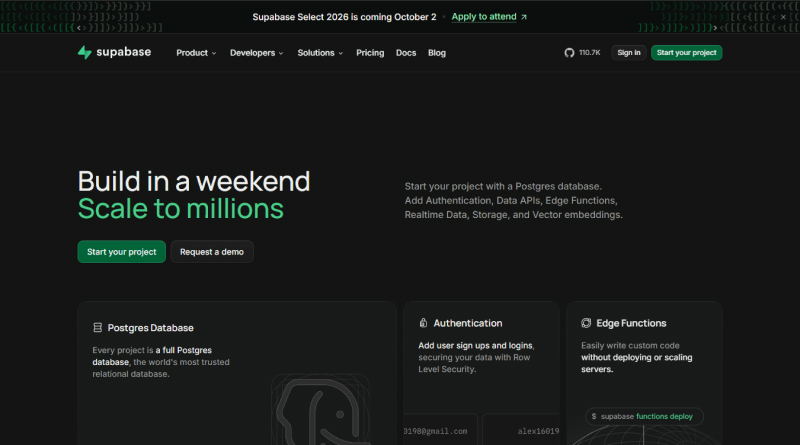
Supabase is an open-source Backend-as-a-Service (BaaS) developed by the application developers to provide the essential backend services for mobile and web applications. Instead of creating an entire database, authentication, file storage, APIs, and other backend services separately, Supabase enables the developers to manage everything through a single platform. It’s based on the PostgreSQL architecture, so it’s useful to understand structured data, relationships between records, and SQL queries.
Key Features of Supabase
1. PostgreSQL-first architecture
Supabase has a PostgreSQL-oriented design. It represents relational data stored in tables. Each table contains records with specific columns and creates relationships with others. For instance, an online shop may create separate tables for its customers, orders, products, and payments and establish mutual links between records of those related tables.
This Supabase approach allows for all the capabilities that developers expect from a conventional SQL database. It supports joins, restrictions, transactions, indexes, and complex requests. Furthermore, Supabase creates various backend services on the basis of PostgreSQL instead of covering the database with a comprehensive system or different database architecture.
2. All backend services
Supabase makes the most of PostgreSQL, offering developers the ability to minimize the burden of backend development. Such services include user authentication and management, file storage, real-time updates, auto-generated APIs, and Edge technology allowing for server-side commands.
The API functionality allows automatic exposure of database operations via REST APIs, while the client libraries simplify the interaction between the application and backend services. The Realtime feature delivers updates from the database to the available clients, thereby enabling various use cases such as live dashboards, collaborative apps, and messaging functionalities.
3. Why do developers choose Supabase?
The open-source nature of Supabase, built on PostgreSQL, allows developers to have database-level governance over their app. Furthermore, the familiarity of the SQL workflow helps in easier implementation of apps when it comes to database relationships and querying requirements.
The transparency provided to developers allows applying the features of PostgreSQL in an optimal way without reshaping the overall data models around noSQL technology.
4. Where Supabase relational principle suits best?
The Supabase’s relational approach is ideal for applications with structured and interconnected data. Let’s take an example of a training platform. Students enroll in courses that contain lessons, and learners upload assignments. These three entities are interconnected, and their relationships can be extracted efficiently through SQL queries.
The same goes in the backend of apps like e-commerce, project management, finance, reservation, and business analytics. The applications can take advantage of the power that PostgreSQL provides through its tables and relationships.
Also Read: Supabase vs. MongoDB
What is Firebase?
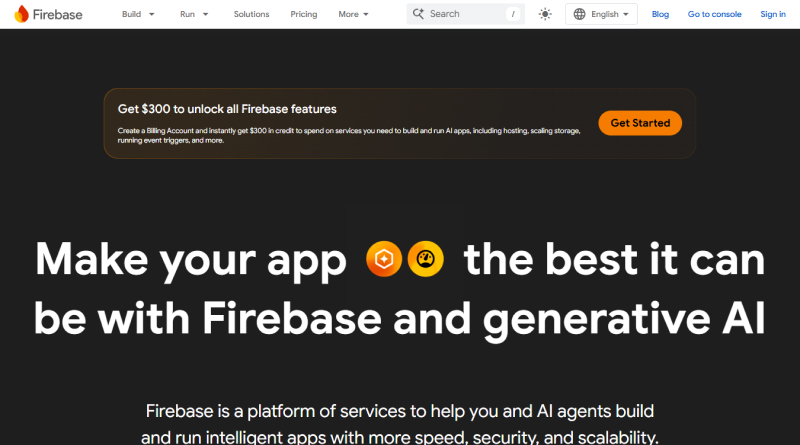
Firebase is a BaaS (Backend-as-a-Service) product from Google that allows developers to build and run mobile and web apps. It lets developers focus purely on Android and iOS app development, instead of dealing with the hardware side of backend infrastructure. It also handles basic backend functionality like database management, authentication, and other required services.
Key Features of Firebase
1. Google Integration
Firebase is popular because it plays well with Google Cloud and has additional support via its ecosystem. Users are able to utilize its services, APIs, and infrastructure with seamless Google Cloud integration. That said, access to both Firebase and Google Cloud allows developers to build applications and utilize Google Cloud.
Firebase can also be used across different platforms, like Android, iOS, Web, Unity, Flutter, or C++, which also adds to its appeal.
2. Firestore and Realtime Database
Firebase differs from the PostgreSQL-first model of Supabase. Instead of the traditional database approach, it has two primary databases: Cloud Firestore and Realtime Database, both of which follow the NoSQL model.
Cloud Firestore provides a document structure for the storage of data. Documents can then be organized into collections. This document-based structure fits well with application data and does not require table relationships.
It has also introduced the Realtime Database, which uses a JSON-based structure and operates on a principle of enabling data synchronization between clients and the database.
Both databases can synchronize the changes automatically with connected apps. Such features can be found in live feeds, chats, collaborative features, and apps that deal with varying data types.
3. Key backend services
Firebase has an extensive list of managed backend services. Firebase Authentication provides various sign-in options, such as using a password, phone number, or widely used federated identity providers. Cloud Storage is another service that allows clients to store files, while Cloud Functions allows the developers to run backend codes without dealing with a server.
Firebase also provides Firebase Hosting for web-based content and apps, web-based content and apps along with security, application monitoring, messaging, and other developer-related services. Firebase SDKs and APIs enable the combination of various services, eliminating the need to create individual backend components from scratch.
4. Why do developers choose Firebase?
Firebase is an option for many developers wanting to turn an idea into a product while avoiding being bogged down by the backend issues. It provides managed services, real-time capabilities, cross-platform SDKs, and integration with the Google Cloud, which is important for mobile and web app developers.
Among the other benefits are the collective Firebase functionalities. For example, an application can take advantage of Firebase Authentication to recognize users, Firestore to save application data, Cloud Storage for files, and Cloud Functions to perform backend logic depending on what needs come through. As a result, there are fewer grounds for connecting and managing multiple separate backends.
5. Where does the Firebase approach suit best?
Firebase is applied for applications using the document-based NoSQL model and benefits from managed real-time backends. A mobile app, a chat platform, or a collaborative app, prototyping and rapid development applications make use of this approach.
Moreover, it’s advantageous for teams that have already used Google Cloud before or are creating products based on the wider Google Cloud ecosystem.
Supabase vs Firebase: Key Differences
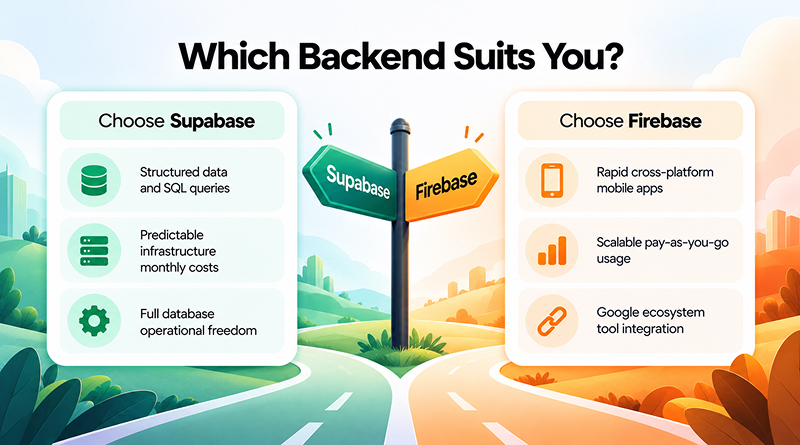
The biggest difference between Supabase and Firebase is not the amount of backend services they provide. There are differences in handling databases, in API usage, in security, in real-time communication, and in scaling. This differentiation is crucial while making decisions on Supabase vs. Firebase.
Supabase builds backend services on top of PostgreSQL. Firebase uses NoSQL databases along with integrated services. The ideal choice between the two depends on the structure of the data used in the application and the needs of the development team.
1. Database and Architecture
The database is one of the most evident distinctions in the case of Supabase vs Firebase. Supabase is based on PostgreSQL, which is a relational SQL database, while Firebase is based on Cloud Firestore and Realtime Database, which both use NoSQL databases.
In an application based on PostgreSQL, data is structured into tables, which are connected to the incoming data. This means that most applications making use of Supabase will have entities that are interrelated: customers and orders, users and subscriptions, or students and classes. The development is carried out with the use of SQL queries, joins, foreign keys, constraints, indexes, and transactions.
Firestore uses a document-dealing method, meaning that the data is kept in the form of data files stored in collections. Thus, the data can be arranged according to individual application objects, and documents can be retrieved without spending much time. Realtime Database, on the other hand, works with data based on JSON structure.
2. Authentication and Security
Both solutions have automatic authentication, so developers are not required to design the whole registration and authentication system. Supabase offers necessary authentication methods like password authentication, OTPs, social and identity provider authentication, and magic links. The same is true for the Firebase authentication platform, which allows working with passwords, phone authentication, etc.
There is a more significant difference in access control between the two platforms. For Supabase, the PostgreSQL Row Level Security (RLS) factor allows you to set rules that define what data a user can see. In particular, it allows specific system users to access only the data where their user ID matches the owner ID specified in the corresponding table records.
Firebase employs security rules to govern access to various services, including Firestore, Realtime Database, and Cloud Storage. Throughout the process, developers need to create rules that can analyze requests and determine whether a user is allowed to read or write required data. Firebase Authentication also cooperates with these rules to determine user identity and authorization criteria.
3. Real-Time Features
Both systems deliver real-time experiences, but they approach this functionality from different database perspectives.
Supabase Realtime is capable of monitoring changes made to data stored in PostgreSQL and sending updates to connected clients. It can be utilized for developing such features as real-time dashboards, notifications, collaboration interfaces, and activity feeds within the application.
Firebase offers functionality applicable in real time through Cloud Firestore, as well as Realtime Database. It monitors updates and receives information continuously from the server backend. This characteristic makes Firebase useful, especially for apps involving chat, up-to-the-nanosecond updates, multi-player interactions, and collaborative features.
4. Developer Experience
Supabase implies a database-first and SQL-oriented approach, with REST APIs automatically designed for all operations applied to a PostgreSQL database. Users can utilize Supabase libraries for performing operations on the database and other backend instruments, which makes the process easy and appealing. This method can be especially significant for programmers who know how to work with relational databases.
On the contrary, Firebase takes a more SDK-oriented approach. The developer usually works with Firestore, Realtime Database, Authentication, and any other Firebase service through the SDK or APIs. Therefore, it is easy to integrate the backend functionalities right in the application code instead of making a separate API layer for a specific operation. For novice programmers, the availability of the SDK through Firebase can bring a feeling of convenience because they can use service-specific functions for common backend operations.
5. Scalability and Performance
There are some differences in how the architecture of the two platforms makes scalability work.
As an application progresses, developers using Supabase must focus on the basic principles of PostgreSQL, because the performance can be hampered by ineffective queries, missing indexes, or too many database connections. The upside is that PostgreSQL has matured into a strong relational database with time and experience.
On the other hand, Firebase hides much of the complexity involved in the physical infrastructure of databases. This allows developers to scale managed services without managing their database servers. Nevertheless, developers still have to come up with an effective way to design Firestore structures, be aware of the limitations of queries, and pay attention to the impacts of reads and writes, storage, and network operations on costs and efficiency.
Supabase vs Firebase Pricing
The cost factor has substantial importance when it comes to choosing between Supabase vs. Firebase. The platforms allow developers to start their operations with minimal or no initial cost, requiring payment only as their projects grow. The main difference between the two systems is in how they facilitate the usage of all resources.
The approach of Supabase consists of mixing plan-based resources with usage-based ones, while Firebase offers the free Spark plan and Blaze plan based on actual usage. Therefore, it is important for developers to make estimations based on the expected number of operations, bandwidth, storage, users, and traffic rather than simply checking the cheaper option.
Supabase Pricing Plans
Supabase offers a free plan for trials and small operations, but it might also limit database and storage, bandwidth, and user management abilities. Team members of a particular project receive a notice if their operations have been put on hold for a long period of time. The Pro plan is $25 per month and involves larger limits and additional features for production purposes.
The Supabase’s end invoice is also impacted through computing resources depending on the app’s size and needs. For bigger companies, Supabase has its custom options and high levels, which means production costs must be calculated by considering the database compute, storage, user access, and the data flow in addition to the basic plan.
Firebase Pricing Plans
Firebase has two main pricing options: Spark, a free tier, and Blaze, a pay-as-you-go pricing plan. The Spark plan is a free plan that allows users to use Firebase services with certain restrictions and does not require a payment method to use the service. The Blaze plan includes everything offered by the free plan but allows higher resource limits than a free plan. Moreover, users can utilize other Google Cloud services without extra pay.
What is the Cheaper Option?
In general, neither Supabase nor Firebase comes off as the cheaper option. Supabase’s pricing is generally much more predictable for apps with predictable infrastructure needs, especially where PostgreSQL is a significant component. But Firebase’s usage-based pricing scheme provides a lot of flexibility for applications that experience drastic changes in their resource consumption. The overall cost is influenced by the volume of database usage, data transfer, storage, and serverless computing taking place on each platform, so developers should think carefully before choosing between Firebase and Supabase.
Supabase vs Firebase: Pros and Cons
Both Supabase and Firebase offer complete backend solutions; however, their distinct architectures make them suitable for different development needs. The table below presents the main pros and cons of Supabase and Firebase.
Supabase Pros & Cons
Firebase Pros & Cons
Conclusion
The decision between Supabase and Firebase ultimately depends on the specific backend requirements of your application.Both platforms make backend development easier and offer databases, authentication, storage, real-time APIs, and serverless functions. But they go about things in different ways.
If you want an app that has PostgreSQL, SQL queries, structured data, and relationships between records, then Supabase is the way to go. Because of its database-first approach, it gives developers the freedom to create sophisticated queries and manage transactions.
Developers prefer Firebase for its rapid application development, managed infrastructure, real-time capabilities, cross-platform SDKs, and integration with the Google Cloud Platform ecosystem. Its NoSQL approach is effective for managing information stored in documents and ensuring well-defined access controls.
The Supabase vs. Firebase debate does not center on identifying one solution as universally superior to the other.
FAQs
1. Is Supabase better than Firebase?
Supabase is a good option for applications based on PostgreSQL, SQL queries, relational databases, and extremely flexible databases. In contrast, Firebase is better suited for applications that require rapid development, real-time features, cross-platform compatibility, and integration with the Google Cloud system.
2. Is Supabase less expensive than Firebase?
While both platforms have free options, Supabase has a pricing plan in which additional costs are added based on usage, whereas Firebase has a free Spark package and pay-as-you-go plans through its Blaze package. Deciding which service is cheaper depends on factors like usage of the database, storage, bandwidth, number of users, and serverless functions.
3. Can Supabase take over from Firebase?
Yes, Supabase can replace Firebase in many scenarios where PostgreSQL and a relational data structure are more appropriate. Supabase offers similar core services to Firebase, including authentication, storage, real-time capabilities, and APIs. However, one challenge in transitioning from Firebase to Supabase is adapting to the different programming approaches.
4. Which platform is more appropriate for beginners?
Both platforms offer valuable resources for beginners, but their usability varies based on a developer’s prior experience. Firebase is more appealing for those looking to quickly build applications using its SDK and services. In contrast, Supabase is more approachable for novices who have some familiarity with SQL or for those wishing to learn backend development through traditional relational databases.