
 Jackson Lane
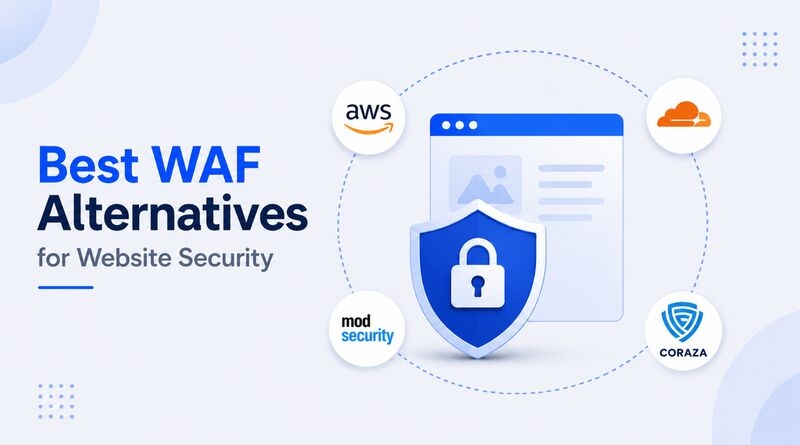
Switching firewalls isn’t usually the first move businesses make when security costs climb. It’s often the last one, after they’ve already tried trimming plans, negotiating with vendors, or just living with a setup that no longer fits. That’s usually the point where people start seeking alternatives in the first place.
Traffic in 2026 carries a different shape entirely, with bot activity growing cheaper to run and harder to separate from real visitors. Businesses scaling their cloud hosting setup often reach this crossroads first, since added infrastructure tends to expose limits a starter firewall was never built to handle. Knowing which firewall to switch to, and why, matters more than just knowing a switch is overdue.
Table Of Content
Quick Look: WAF Alternative Categories
- ☁️Cloud-based WAFs: Off-site traffic filtering, with capacity that adjusts automatically as demand changes.
- 💻Open-source WAFs: Zero licensing fees apply, while internal engineering teams manage deployment and rule maintenance.
- ⚡CDN-bundled security: Content delivery, performance optimization, and firewall protection deploy together in a single package.
- 🛡️Managed hosting security: Firewall coverage integrates directly into the hosting environment, eliminating manual deployment overhead.
What Are Web Application Firewalls?
Nothing reaches your server without getting checked first. That’s basically what a security guard does, and it’s what a WAF does too. Every request gets checked before it’s waved through or turned away. Pass, and you’re in. Fail, and the firewall blocks it. It’s built to catch the harmful requests while letting real visitors pass through without even noticing it’s there. Because this filtering layer operates apart from the application’s own code, protection can shift as threats change without touching the underlying build. Most alternatives on this list share that same core mechanic, even though the way each one deploys, prices, and scales differs considerably.
Related Read: Best Web Application Firewalls for Small Businesses
What Should You Look for in a WAF Alternative?
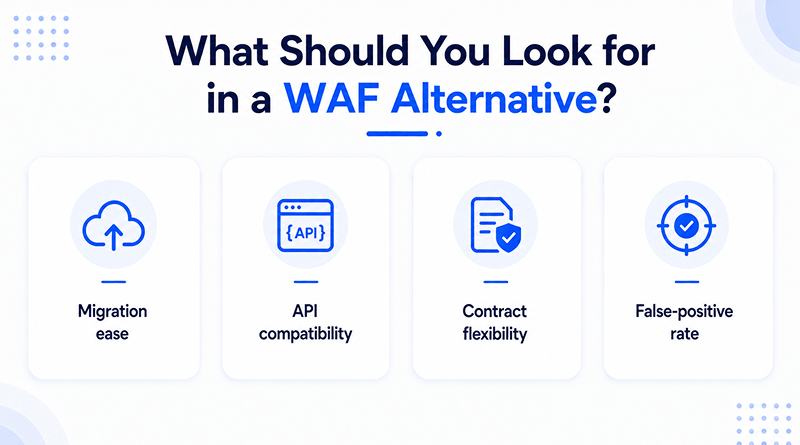
Switching firewalls involves more than price alone, especially once a team factors in how much technical effort a migration demands. Four factors decide whether a WAF alternative actually solves a problem or introduces a new one.
🔄
Migration Ease
How much rework a switch demands before protection goes live again.
🔌
API Compatibility
Does it plug into what you already have, or does it need several workarounds first?
📜
Contract Flexibility
Can you scale the plan up or down or cancel it without getting stuck in a long lock-in?
🎯
False-Positive Rate
How often the tool flags legitimate traffic as a threat by mistake.
Weighing these four areas together, rather than in isolation, reveals a much clearer picture of which alternative fits. Teams that work through Vibe coding workflows often lean harder on API compatibility, since integrations tend to shift faster than traditional development cycles, and a business managing its SSL certificate setup will likely weigh that same factor heavily too.
What Are the Best WAF Alternatives in 2026?
Every alternative on this list solves a different kind of gap, whether that gap involves cost, control, or convenience. Grouping them by the reason a business switches, rather than ranking by name recognition, turns this list of WAF alternatives into something a team can actually act on.
Open-Source WAF Alternatives
1. ModSecurity
ModSecurity remains the most established open-source firewall available today, built as a module that plugs directly into Apache, Nginx, or IIS servers. Rule sets are based on the OWASP Core Rule Set, giving the technical team full visibility into exactly what each rule blocks and why. Configuration demands genuine server-level access, which rules it out for teams without an engineer already on staff. Larger agencies managing several client servers often prefer it anyway, since the trade-off buys near-total control over which traffic passes through.
Standout perks
- Deep customization for specific traffic patterns
- No licensing cost, ever
- Full transparency into every active rule
2. NAXSI
NAXSI takes a whitelist-first approach instead of relying on attack signatures, blocking anything that doesn’t match traffic patterns already approved. Built specifically for Nginx, it works well for teams running lightweight, high-traffic applications that need minimal overhead. Learning its scoring system takes real time, and misconfigured rules can block legitimate requests early in the process. Its lightweight footprint appeals to teams running high-volume APIs where every millisecond of latency shows up in performance metrics.
Standout perks
- Whitelist-based filtering model
- Minimal performance overhead
- Built specifically for Nginx environments
3. Coraza
Coraza is a newer, Golang-based rewrite of the ModSecurity engine, appealing to teams running Drupal hosting or other custom-built platforms that need an embeddable security layer. It runs as a standalone library, making it easier to fold into custom applications or proxies without a heavy rebuild. Community support remains smaller than older projects, so troubleshooting often depends on internal expertise rather than public documentation. Development stays active regardless, and teams already comfortable with Golang tend to pick it up faster than expected.
Standout perks
- OWASP Core Rule Set compatibility
- Lightweight, embeddable architecture
- Active development with modern tooling
Related Read: WAF vs. Firewall: Which is the Best Security Layer?
Cloud-Native WAF Alternatives
1. Cloudflare
Cloudflare bundles firewall protection with its global CDN, and setup is just a DNS change — no server-level config needed. That’s a big part of why teams on WooCommerce or similar e-commerce platforms go with it: you get the speed boost and the security in one move. More people are searching for Cloudflare WAF alternatives too, mostly teams that want more customization without jumping to a pricier tier. Even so, few tools match its network for sheer global reach and consistent uptime.
Worth noting
- DNS-based setup within minutes
- Bundled CDN and performance gains
- Free tier for smaller websites
2. AWS WAF
AWS WAF fits naturally into a business already running on cloud VPS infrastructure through Amazon, since rules attach directly to existing services. Pricing is usage-based rather than a flat fee, which works well if your traffic is unpredictable. Teams looking into AWS WAF alternatives usually point to configuration complexity as the real reason they start shopping around. Pricing tends to come up later, if at all. Businesses already committed to the AWS ecosystem, though, rarely see a reason to look past it.
Worth noting
- Native integration with AWS services
- Usage-based pricing model
- Custom rule creation for specific traffic
3. Azure WAF
Azure WAF serves the same purpose for businesses already inside Microsoft’s cloud ecosystem, tying firewall rules directly to existing Azure resources. The managed rule sets in Azure WAF update automatically, which reduces the need for manual tuning that smaller teams often struggle to maintain. Some prior familiarity with the platform helps too, since the documentation assumes you’re already fairly comfortable with Azure’s broader toolset. For businesses running Microsoft-centric stacks, that consistency usually matters more than any single standout feature.
Worth noting
- Automatic managed rule updates
- Tight integration with Azure resources
- Scales alongside existing cloud infrastructure
Related Read: AWS vs Azure: Which Cloud Platform is best for Your Business?
MilesWeb: Managed Hosting-Level WAF Security
MilesWeb builds firewall protection directly into its hosting plans, removing the need to manage a separate security vendor entirely. Pair that with LiteSpeed’s server provider and you get protection and speed handled under one roof. For anyone managing a complex CMS setup, that’s usually easier to maintain than stitching together several separate tools. A single support line for both hosting and security also cuts down on the back-and-forth that separate vendors usually demand.
Standout perks
- Firewall protection built into hosting
- No separate vendor to manage
- LiteSpeed performance with built-in protection
Which WAF Alternative Fits Which Business?
Placing these WAF tools side by side highlights how differently each one prices, deploys, and suits a small business compared with a larger operation. The table below narrows that comparison down to the details that shape most decisions.
How Should You Choose Based on Team Size and Technical Capacity?
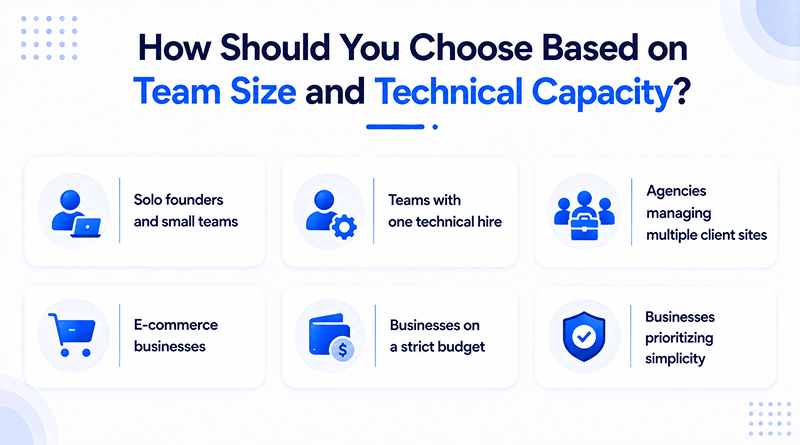
The real starting point for any WAF for small businesses’ decisions is matching team size to technical capacity, not chasing the most popular name on the market. A five-person team without an engineer needs an entirely different approach compared with a company running its own infrastructure team.
Solo founders and small teams
Managed hosting security or Cloudflare’s free tier covers solid protection without demanding technical setup or dedicated staff.
Teams with one technical hire
Cloud-native options like AWS WAF or Azure WAF stay manageable once someone in-house understands cloud configuration.
Agencies managing multiple sites
ModSecurity works well here, mainly because you can tune the rules differently for each client instead of applying one blanket policy.
E-commerce businesses
Sales periods are when traffic spikes hit hardest, so cloud-native or managed hosting is worth it just to avoid downtime at the worst possible time.
Businesses on a strict budget
NAXSI and Coraza cost nothing in licensing fees. The catch is that you need someone in-house who actually knows how to run them.
Businesses prioritizing simplicity
No extra vendor to manage, no new line item. Managed hosting security just gets bundled into infrastructure you’re already paying for.
Why Does Switching WAFs Become More Relevant in 2026?
Bot traffic in 2026 doesn’t behave like it did even two years ago. AI-powered tools have made large-scale scanning cheap enough that almost anyone can run it. A firewall built on static signatures alone is going to miss patterns that shift within days, not months. Compliance requirements have also tightened across several industries, pushing businesses to document their security setup with more detail than before.
None of these factors makes switching firewalls urgent for every business, but it does explain why so many are reconsidering the tool they picked years ago. A firewall chosen for 2023’s traffic rarely accounts for what a 2026 attacker actually attempts, and that gap only grows wider the longer it stays unexamined.
Closing Insights
Every business on this list started in the same place: a firewall that used to work and didn’t anymore. Cloudflare remains the fastest path for teams wanting simplicity, ModSecurity earns its place for technical teams wanting full control, and MilesWeb stands out for businesses wanting protection bundled directly into hosting they already manage.
None of these tools work as a universal answer, and that’s precisely the point behind treating the list as a shortlist rather than a single recommendation. Traffic will keep evolving through 2026 and beyond, and the businesses that revisit this choice periodically tend to stay a step ahead of whatever comes next.
Frequently Asked Questions
1. Is there a free alternative to WAF?
Yes. ModSecurity, NAXSI, and Coraza are all open-source and free to run. You’ll just need someone with the technical expertise to set them up and keep the rules current, since there’s no vendor support to rely on.
2. What can I use instead of a WAF?
It depends on what problem you’re solving. Some teams go with rate limiting at the server level, others lean on CDN-based protection like Cloudflare, managed hosting with built-in security, or reverse proxy tools like Nginx with security modules layered in. Most sites end up using a mix rather than picking just one.
3. Is ModSecurity a viable WAF alternative?
It’s a strong pick if you need granular control and don’t mind the setup work. The rule customization is difficult to beat for agencies juggling different client requirements. The tradeoff is that it’s not plug-and-play. You’re maintaining rulesets yourself, which takes real time and technical skill.
4. Do I need a WAF for a small website?
Whether a WAF is necessary for a small site depends on what that website actually handles. A static brochure website with no logins or payment forms isn’t much of a target. But collect user data, process payments, or run on WordPress/WooCommerce, and you’re suddenly a lot more appealing to attackers. That’s precisely when a WAF starts paying for itself.
5. What is the best open-source WAF?
ModSecurity has been around the longest, and its large community size is beneficial when you encounter edge cases. Coraza is newer, built specifically to work well with modern reverse proxies. NAXSI gives up some flexibility in exchange for being lighter and easier to configure. Your stack, and how much time you want to spend tuning rules, will decide which one fits.