Jackson Lane

The domain industry continues to be the dynamic digital asset that empowers online businesses’ identity. Until August 2026, the total count of registered domains is 401.6 million, compounding at an annual growth of 8.1% [Source: Name.com]. Out of them, 179.1 million domains encompass .com/.net registrations, and only 52.9 million are new, whereas the rest of the figures reflect generic TLDs.
So, the market and industry share look attractive, and thus the phenomenon of ‘domain investing’ is gaining popularity. Digital entrepreneurs, tech-driven investors, and new business owners represent the timely opportunity. The beginner guide covers all domain investing essentials, what’s driving the market, where the value lies, and how they can build a portfolio that works for business objectives.
Table of Content
What is Domain Investing?
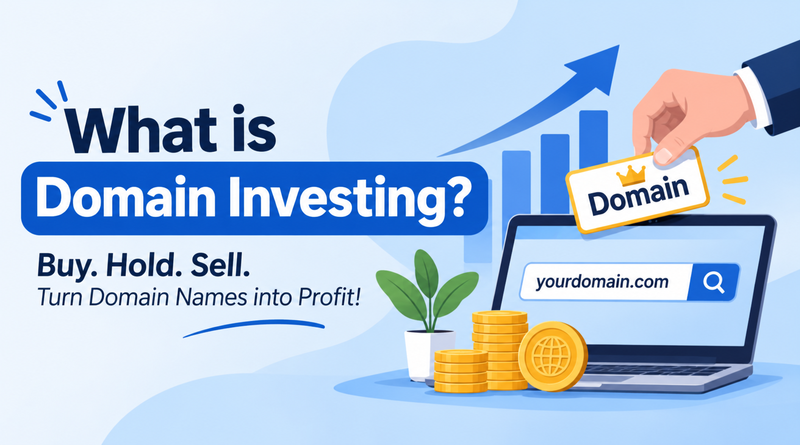
Domain investing/domain flipping is a practice of buying domain names with the objective of reselling them at a profit. Like other investments in equities, properties and bonds, domain investing requires extensive market research, timing and critical thinking to maximize the ROI of these digital investments.
Also Read: Domain Transfer Checklist
Types of Domain Investing
Domain investors use one or more of these methods :
- Buying & Selling Domains: Quality domain names should appreciate over time. Sell at a fair market price. Target domains include brandable keywords, short acronyms and niche specific terms available for auction.
- Flipping (short term investing). Flipping domains buying undervalued or expired domains and selling them for a quick profit is called flipping domains.
- Domain Parking & Monetization: Purchase domains with traffic and earn money automatically by displaying ads or affiliate links.
- Develop-and-sell: A domain value is inflated by building a static website and then gets sold.
Benefits of Domain Name Investing
Investing in a domain name could yield you the following benefits:
- Potential for high returns: A properly chosen domain name has a significant resale value, allowing investors to generate significant returns.
- Passive income: Domain investing is a source of earning passive income by leasing it to others who want to use it for their website.
- Diversification: By spreading your investments you protect yourself from uncertainty. Intro domain exposure is a complement to traditional investment methods.
- Low maintenance: A domain investment is low maintenance compared to a physical property or business. You don’t have to worry about inventory, employees, or day-to-day operations.
Also Read: What is the .SI domain?
How to Start Domain Investing?
1. Define your Investment Strategy
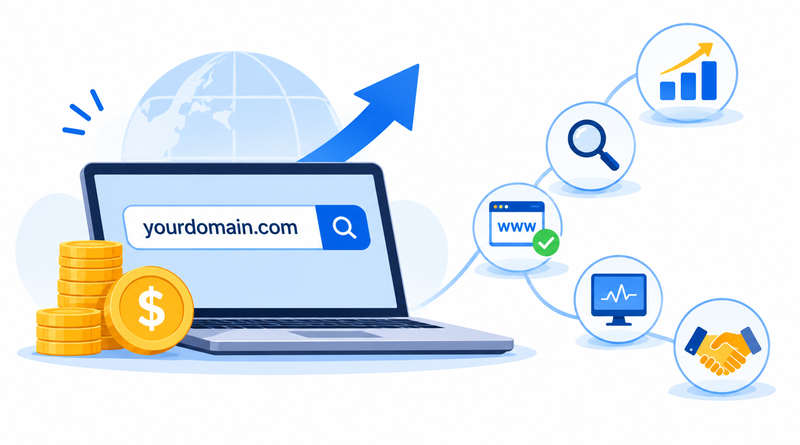
Build a roadmap for investing in portfolios. Planning has to fit your resources and your business objectives.
Are you looking to flip domains for quick profits or hold domains strategically for long-term gains?
Each strategy requires certain capabilities. Buy-and-hold investors will benefit from tools that track renewals and market trends. The domain marketplace is a place to register fast and transfer easily. They provide flexibility in DNS configuration and branding.
2. Market Research
You need to do a lot of market research to find domains worth buying. That includes looking at trends via tools such as Google Trends, evaluating keyword value, exploring shifts within an industry and tracking emerging areas of technology. Seek opportunities in fast-growing verticals, niche industries or emerging markets.
You can get almost all types of domain extensions like .si, .ai, .com, .net, .tech and various other regional ccTLDs at MilesWeb. This diversity helps investors to stay ahead of trends, offering domain choices that reflect shifting market demands.
3. Register Your Domains
Check the availability, and don’t lose a potential domain that carries value in future terms. Use our domain checker tool to check the availability. Furthermore, get it for free with our web hosting plans.
MilesWeb is one of the top-notch domain registrars for migrating and transferring domains. We provide a tool to check domain name availability and support bulk domain transfers, WHOIS protection, domain forwarding, and transparent renewals to manage larger portfolios.
Also Read: What Happens If You Don’t Renew Your Domain
4. Monitor, Manage, and Optimize
Domain acquisition is one of the practices where investors track the portfolio performance, TLD trends, buyer demand, and domain health over time. Monitoring traffic patterns, domain history, and SEO profiles help identify high-value assets and detect underperforming ones.
With MilesWeb you can enable or disable the domain renewal option and manage multiple domains through the control panel. As a result, invoice tracking, transaction logs, and role-based access become easier and streamline operational efficiency.
5. Sell, Lease, or Develop
Domains are easy to trade on marketplaces, simplifying branding and boosting their market value. Although MilesWeb is not a trading marketplace for buying or selling domains, it still offers valuable services. Whether clients want to sell or lease their domains is a strictly private matter between them. Overall, it benefits the investor’s growth and provides strategic guidance as the portfolio evolves.
Popular Domain Names
- CarInsurance.com sold for $49.7 million. It serves as a consumer marketplace, completely capturing the top-of-mind search term for the industry.
- Insurance.com sold for $35.6 million.
- Loans.com sold for $3.0 million.
Also Read: .io vs .com
Conclusion
Domain investing is one of the best ways to earn money online. Identify the market demand, look for exclusivity, and opt for premium domain names. A short domain name is a digital asset that you want to sell to the business that requires it, build a website on, and hold when the demand grows.
But remember, it is not an overnight getting-rich scheme. Most names go unsold, and renewal fees hike surprisingly. Successful people treat it like any other investment: they research trends, pick names with real commercial value, keep an eye on costs, and stay patient.
If you’re just starting out, keep it small. Register a few names you truly believe in, learn how pricing and renewals work, and see how the market responds before you scale up. Choose a registrar that aligns with your goals too, because transfer ease, renewal rates, and privacy options matter more over time than a cheap first-year deal.
FAQs
1. What is domain investing?
Domain investing involves buying website domain names such as short, brandable or keyword-rich domains with the goal of selling them later for a higher price or making money from them by leasing or parking them. Value comes from the quality of a domain’s name, its extension (.com for example) and demand from businesses.
2. How much money will I need to begin in domain investing?
You can get started with as little as $ 50 to $ 500 . Many domains are around $ 10 to $ 15 per year to register . If you have $1,000+ to spend, you can diversify your portfolio more or even pick up some premium names on aftermarkets. You will also want to budget for annual renewal fees.
3. What’s the difference between domain investing and domain flipping?
Domain investing is often a long-term strategy, with quality domains held for months or years until a buyer is found at a good price. Domain flipping is the faster, higher volume game of buying undervalued domains and flipping them for a smaller profit.