Jackson Lane

A wonderful name has a shelf life measured in opportunities. Startups launch daily, rebrands arrive weekly, and each one searches for an address that sounds credible from the first click. Domain flipping connects that steady demand with investors who anticipate it. The result is a market where research, timing, and taste decide who profits and by how much.
That approach turns domains into tradable assets with measurable demand. The cycle itself is simple: an investor spots an undervalued name, secures it, and passes it to a business that needs it more. Those who treat names like digital real estate build portfolios that compound over time. In this post, we will explore how domain flipping works, which strategies produce profit, where to source and sell names, and how to assess value and risk before committing a single dollar.
Table Of Content
What is domain flipping?
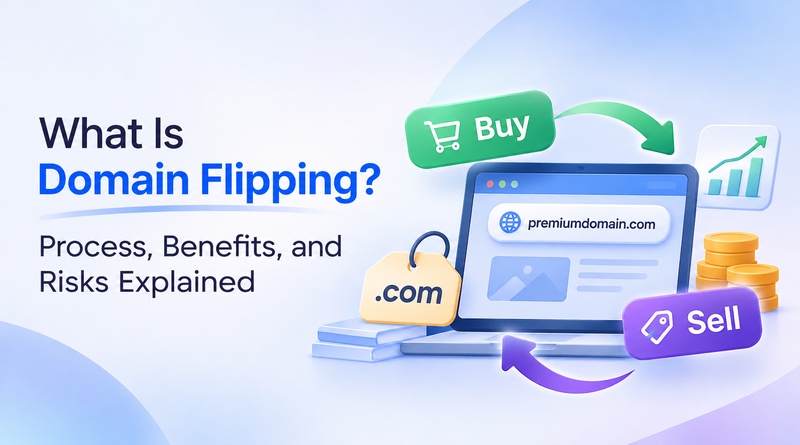
Domain flipping is the practice of buying a domain name at a low price and reselling it at a higher one. The flipper adds no code and builds no product. The profit comes from timing, domain name research, and a sharp sense of what a future buyer will pay for.
The model belongs to the broader market for domain name investing, where participants hold names as assets. Some flippers turn names around within days. Others keep them for years until the right company arrives. Either way, the domain flipping business depends on one principle: a name’s worth is set by the buyer’s need, not the seller’s cost.
Related Read : What is Domain Investing? Turn Online Identity into a Digital Asset
How does domain flipping work?
The cycle has five stages, and each one rewards discipline.
A flipper starts with research. Search volume and sector funding show where buyer demand is growing. Flippers source names from drop lists and auctions, check the prices that similar names reached, and set each asking price from that sales evidence.
Marketplace listings and a simple landing page with a contact route put the name in front of buyers. Once an offer arrives, both sides negotiate, and an escrow account holds the payment until the domain transfers. Flippers who track every stage learn quickly which niches deliver returns and which drain budgets.
What are the benefits of domain flipping?
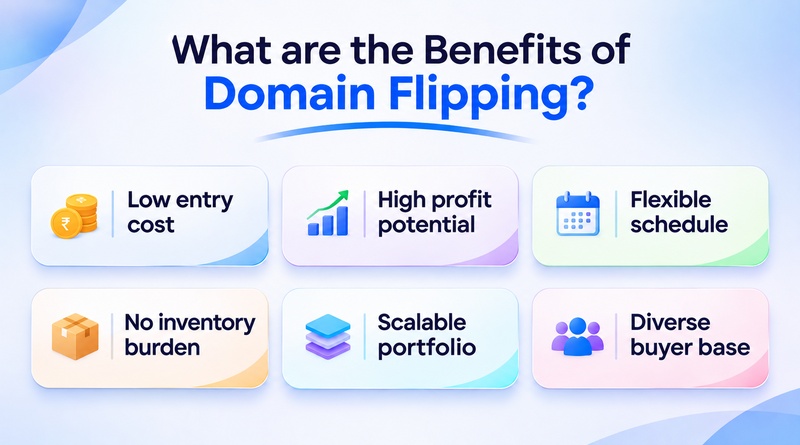
Domain flipping appeals to newcomers and veterans for practical reasons. Capital needs stay modest, the work happens online, and a single strong sale can fund the next ten purchases. The six benefits below explain why the domain flipping business keeps attracting new participants.
Low entry cost
A fresh registration costs a few dollars, and many viable expired names sell for similar amounts at auction. A beginner can start with a small budget and still build a diverse list. A small purchase price keeps the loss small when a name stays unsold.
High profit potential
Well-chosen names often resell at multiples of their purchase price. A single sale can cover the renewal fees of an entire portfolio for years. Margins like these are rare in most small-scale ventures.
Flexible schedule
Research, listing, and negotiation all happen from a laptop. A flipper can run the operation alongside a job or a business. Offers arrive by email, so timing stays manageable.
No inventory burden
Digital assets need no warehouse, packaging, or shipping. A portfolio of two hundred names takes the same physical space as one. Costs are reduced to renewals and marketplace fees.
Scalable portfolio
Successful flippers reinvest profits into more names and better categories. Each sale funds a stronger acquisition, and the portfolio grows without extra staff. Learning compounds as well, because every deal sharpens judgment.
Diverse buyer base
Startups, agencies, local businesses, and established brands all buy domains. Different buyer types open different price ranges for the same asset. A name rejected by one market may find a home in another, and a founder who plans a launch with an AI website builder often needs a matching address within days.
How do you find domains worth flipping?
Names that resell well follow patterns. Names that buyers can spell after hearing them once tend to resell faster. Names that combine a popular keyword with a broad commercial angle tend to attract more offers than unfamiliar invented words.
Research tools help. Google Trends flags industries gaining momentum. Sales databases show what comparable names are fetched at auction and through brokers. A startup needs a name it can protect, and descriptive keywords rarely qualify for trademark rights. That is why brandable domain names attract strong offers. In AI, fintech, and health tech, a premium domain name also signals credibility to investors. NamePros threads on domain investing show beginners how working investors judge a name.
How do you find expired domains?
Expired domains come from registrants who skip renewal. Once a grace period ends, the name enters a drop list and becomes available again. Many of these names carry backlinks, age, and traffic history that raise their value.
ExpiredDomains.net lets buyers filter upcoming drops by length, age, and extension. GoDaddy Auctions lists names nearing expiry, while NameJet and DropCatch take backorders on names about to drop. Check each domain name through a backlink tool and the Wayback Machine to confirm the history is clean. A name with spam links or an explicit-content history loses value quickly, while one with a tidy record becomes a real find. Buyers who plan to host a purchased name for testing often compare options for domain hosting before they commit to a project.
Where can you sell a flipped domain?
Several channels serve different goals. Marketplaces such as Sedo, Afternic, Dan.com, and Atom present a listing to large buyer audiences. Auction platforms suit rapid sales, and direct outreach suits names with an obvious corporate match.
A strong listing includes a brief description, a fair asking price, and a simple inquiry form. Point the domain to a clean landing page with a “for sale” notice so direct visitors can make an offer. Brokers handle high-value names and charge a commission, which often pays for itself through better negotiation. Many flippers use more than one channel and compare responses to see where demand lives.
What risks come with domain flipping?
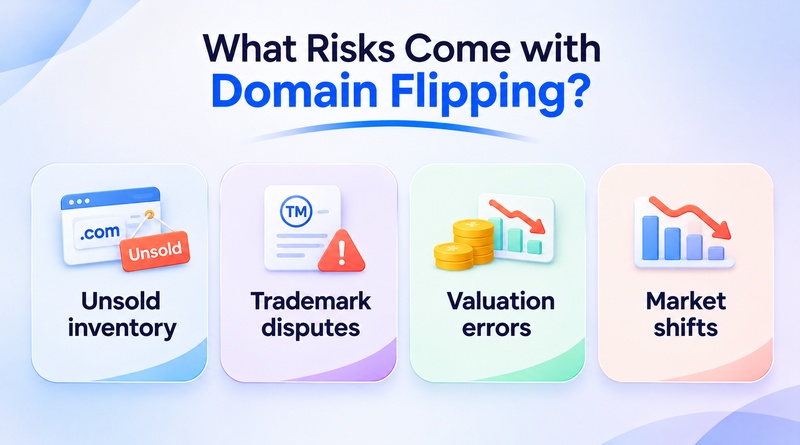
Every market has downsides, and domain names are no exception. Prices vary widely, liquidity depends on buyer interest, and legal questions surround certain names. Understanding the four main risks lets a flipper plan around them.
Risk 01
Unsold inventory
Many names never receive an offer. Renewal fees accumulate every year, and a large unsold list can erase earlier profits. Disciplined flippers review their portfolio annually and drop names that show no interest.
Risk 02
Trademark disputes
A domain that closely resembles a registered brand can draw a UDRP complaint from the trademark holder. A loss means the domain transfers to the brand owner and the flipper receives nothing. Searching trademark databases before every purchase prevents most of these cases.
Risk 03
Valuation errors
Appraisal tools often quote more than buyers pay. Attachment to a name hides the gap. A high winning bid leaves the flipper with little room for profit. Comparing real sales data guards against inflated expectations.
Risk 04
Market shifts
A keyword that peaks this year can fade by the next. Shifts in extensions and search habits move demand as well. New extensions and changing search behavior also affect demand. A flipper who spreads purchases across several niches absorbs these swings more comfortably.
What are the best domain valuation tools?
Valuation turns instinct into evidence. The best tools draw on past sales, keyword data, and extension trends to give a range rather than a verdict. Using two or three together produces a sounder estimate for domain name valuation than any single score.
GoDaddy

GoDaddy Domain Value Appraisal
This tool estimates a name’s value from comparable sales across GoDaddy’s marketplace. It returns a price range within seconds. Flippers use it as a quick first filter before more profound research.
Estibot

Estibot
Estibot prices a name from its keyword demand, extension, and comparable sales. It remains popular among portfolio investors for its bulk checking feature. Results work best as a reference point rather than a final price.
Sedo

Sedo Domain Valuation
Sedo bases its estimate on its sales history and market data. The result helps set an asking price for listings on its marketplace. It suits investors who plan to sell through Sedo.
NameBio

NameBio
NameBio holds a searchable database of public domain sales. Investors filter by keyword, length, or extension to see real prices paid. Many professionals treat it as the most reliable source for comparable data.
DNJournal

DNJournal Sales Reports
DNJournal publishes weekly and annual charts of reported sales. The data shows which categories and price bands are active. Trend watchers use this data to time their purchases in rising niches.
Key Takeaways
Every flip follows the same arc: spot a trend, secure a name, price it from real sales, and match it with a buyer who needs it. A small budget and a few registrations are enough to begin. Before placing a bid, run a trademark search, read the history of each expired name, and compare several appraisal reports for sound domain name valuation. Steady research builds stronger portfolios than quick impulse buys.
New products launch every day, and each one needs an address that people remember. At MilesWeb, we follow this market closely, and we expect investors who pair curiosity with careful analysis to find strong openings in the years ahead. The next great brand name may be one search away.
Frequently Asked Questions
1. What is domain flipping?
Domain flipping is the resale of web addresses for a profit. An investor registers a name, or buys one from an auction or a drop list, and then sells it to a company that wants it. A name bought for $10 and sold for $2,500 is a typical success story. Fees for renewals and marketplace commissions come out of that margin.
2. Is domain flipping profitable?
It is profitable for investors who research before they buy, and unprofitable for those who guess. Most names in a portfolio sell slowly or not at all, and a small share of strong sales produces most of the income. Annual renewal costs on weak names consume profit quietly, so successful flippers review their lists every year and release the ones that draw no inquiries.
3. What are the risks involved in domain flipping?
Four risks matter most: unsold inventory, trademark disputes, overpaying at auction, and falling demand for a niche. A name that resembles a registered brand can be taken away through a UDRP complaint, which means a total loss on that purchase. Searching trademark records before each buy and setting a maximum bid in advance remove the two most common mistakes.
4. What types of domain names are best for flipping?
Two-word .com names with a clear meaning lead the market, followed by short, brandable coinages that startups can turn into company names. Buyers also pay well for keywords tied to fast-growing sectors. Hyphens, numbers in the middle of a word, and unusual spellings lower resale odds, since buyers must explain the name every time they say it aloud.