
 Jackson Lane
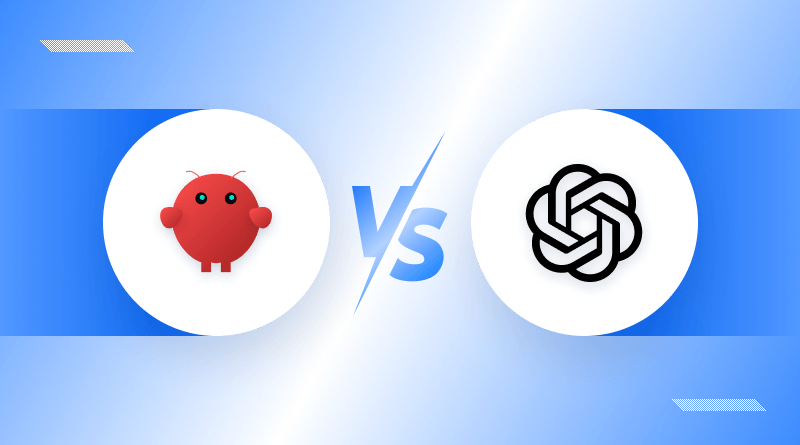
AI has transitioned from generating simple text to platforms that can plan, act, and execute tasks. Comparing best AI tools based on how much work they can automate is the core strategy for businesses, developers, and content creators. This article offers an in-depth look into OpenClaw vs ChatGPT from a different perspective, providing a deeper insight.
Each platform serves a different purpose. One focuses on automation and control. The other emphasises advanced conversational capabilities with its user. Here you will gain a full comparison between OpenClaw and ChatGPT, covering key features, real-world experiences, security measures, and hands-on use.
Table Of Content
AI Market Adoption and Growth
Statista, a leading business intelligence platform, conducted an in-depth research on the consumption of AI across different regions. Based on their reports, the global AI industry is likely to be valued at $305.9 billion by 2025-2026. This represents the rapid growth of this sector. In addition to being used at work, AI is also affecting people in various ways every day. According to a McKinsey & Company report, 55% of businesses are already using AI in some capacity in the workplace.
According to OpenAI, ChatGPT has achieved over 100 million active users monthly, making it one of the fastest-growing apps in history. This data demonstrates that the presence of AI in our daily work and digital lives is an inevitable part.
Understanding the Basics
What is OpenClaw?
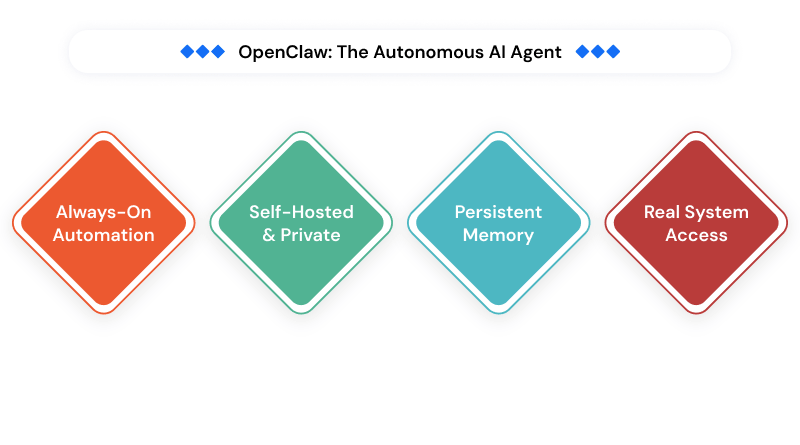
OpenClaw is an open-source AI agent designed to run locally on your system. It supports careful planning, timely workflow executions, and minimal human input. It runs processes on your infrastructure with long-term memory recalls. You only need to set up your tasks once with proper instructions. Later, it leaves you worry-free, as it smartly manages all your repetitive tasks.
This tool gains real access to your projects as it runs different shell commands and edits files on your local machine. OpenClaw VPS solution backed by expert support services by leading hosting platforms such as MilesWeb, makes an ideal platform for admin and developers.
OpenClaw is preferred by users who want:
- Automation that runs seamlessly for 24/7.
- Self-host environment for privacy measures.
- Persistent memory to run long-tenure tasks.
- Real-time connectivity with messaging apps.
What is ChatGPT?
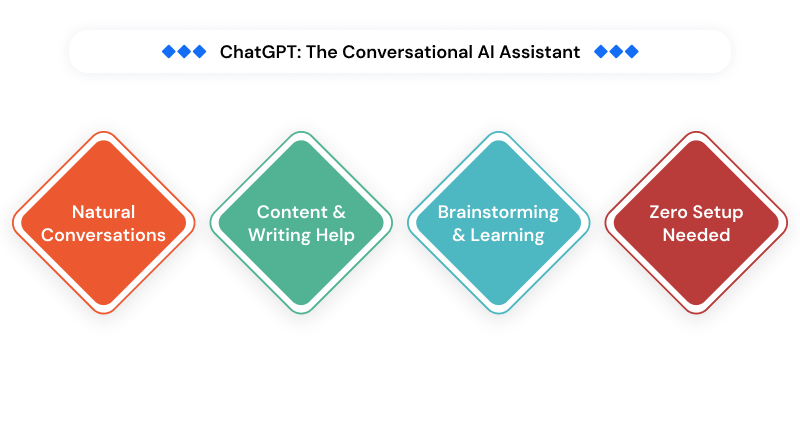
ChatGPT is an artificial intelligence-powered program for everyday tasks. It is built on a machine learning model designed for natural language processing tasks. On this platform, you can ask queries and make custom requests to get a set of information. This easy-to-use tool has gained immense popularity as the best alternative to traditional search engines.
With a dialogue format, ChatGPT answers follow-up questions with the best possible approaches. This tool is designed to mimic human conversation and provide tailored results based on the instructions provided through the prompt. It excels as a virtual assistant and customer support system.
ChatGPT is preferred by users who want:
- Correct text or pages for specific requirements.
- Gain a detailed explanation of a specific topic.
- Script social media posts with a calendar.
- ChatGPT plugins to redefine workflows.
Related read: Everything you need to know about ChatGPT
OpenClaw vs. ChatGPT: Core Differences
1. Core Functionality
- OpenClaw
The primary purpose of OpenClaw is to automate and execute. When leveraged correctly, they supplement the human workforce while reducing costs associated with repetitive tasks. Because they can be integrated with various other systems and tools through API and through other mediums, increased operational efficiency is possible across the enterprise.
- ChatGPT
ChatGPT is an artificial intelligence program that can generate written content, answer questions and assist with coding. The real benefit of ChatGPT is its ability to adapt to your particular needs and to understand human language in a natural way. ChatGPT is designed to serve as a creative and informational assistant, providing conversational support to users who need help with brainstorming, writing, learning, and problem-solving.
2. Ease of Use
- OpenClaw
Users will need an understanding of system environments, system integrations, and automation logic. After initial configuration, OpenClaw functions autonomously with minimal ongoing efforts.
- ChatGPT
ChatGPT was built around a straightforward idea that accessing a powerful AI shouldn’t require a manual. There’s no installation process, no configuration, and no prior technical experience needed. Someone entirely new to AI tools can open the interface and have a working conversation within minutes.
3. Customization
- OpenClaw
OpenClaw enables users to create complex automation systems through a wide variety of customization options. Agents, their tasks, and actions with other applications can be completely customized by the user. With the level of control, OpenClaw is well-suited for advanced automation and creating custom workflows, especially in very technologically complex environments.
- ChatGPT
ChatGPT enables users to customize its output by allowing them to create their own prompt templates. However, the ability to customize an API is restricted. Additionally, ChatGPT customizations are designed to enhance overall user experience rather than using ChatGPT as a computer application or platform. This makes it less complicated but also less flexible than OpenClaw.
4. Deployment
- OpenClaw
Organizations have the option of deploying the system locally on their systems or on private servers (of their own). Full management of all data, infrastructure, and operational executions rests with the organization. This is the preferred option for those who require privacy and also want to handle internal data in a manner that does not require any third-party services. Local deployment minimizes dependence on outside services.
- ChatGPT
ChatGPT can be accessed through web services or APIs on cloud-based servers and requires an internet connection to work. Because of this, ChatGPT is easy to use and has scalability without the hassle of managing infrastructure. However, there is reduced direct control over how data is handled.
5. Cost Structure
- OpenClaw
OpenClaw is an open-source and free-to-use program. However, you may have to pay for the infrastructure, maintenance, and integrations associated with it. Costs can vary according to how much you use OpenClaw and how you configure it. OpenClaw is cost-effective for users who can manage their systems.
- ChatGPT
ChatGPT offers a combination of subscription and usage-based pricing. Using premium plans and API usage has an associated cost, so users will have predictable pricing. Not having to worry about managing infrastructure makes this model useful for those who want this convenience.
6. ChatGPT Safety vs. OpenClaw
- ChatGPT
This tool has put several protective measures to govern how the system handles information. For organisations with stricter requirements, the enterprise tier goes a step further, as data shared during those sessions isn’t fed back into model training, which matters considerably when sensitive business information is involved. It’s a meaningful distinction for companies weighing the risks of running AI tools through cloud-based infrastructure.
- OpenClaw
Organizations can deploy OpenClaw locally and have full control of their infrastructure to run on. This means users have better control over their data and rely less on external servers. Keeping data on premises allows OpenClaw to better support organizations’ compliance policies and privacy requirements.
7. Limitations
- OpenClaw
OpenClaw’s performance, reliability, and scalability depend on your system and environment. Therefore, the performance, reliability and scalability of OpenClaw vary according to your installation and configuration levels. Also, OpenClaw has limited community support. The agent may expose system vulnerabilities, leaving a scope for scammers to hack and compromise the critical information. Users who lack basic technical expertise will find its setup complex and confusing to operate.
- ChatGPT
The ease of use feature of ChatGPT comes with its lack of automation. As ChatGPT is cloud-hosted, it requires a decent internet connection and can present security risks while handling sensitive information. The customisation available through ChatGPT is limited compared to open-source software, and advanced features are generally only available through paid subscriptions.
OpenClaw vs. ChatGPT 2026: Which One Should You Choose?
Choose ChatGPT if:
- You need quick learning and analysis support.
- You prefer multi-dimensional AI for routine tasks.
- You seek quick responses and reliable support.
- You need assistance for brainstorming, content, and coding.
Choose OpenClaw if:
- You want custom workflows with internal systems.
- You need complete automation to reduce repetitive tasks.
- You prefer AI models that take auto actions.
- You want to run long-term, goal-based processes.
- You seek authoritative access to your AI setup.
OpenClaw vs. ChatGPT: Future Outlook
- ChatGPT Outlook
– AI tools are no longer just a chatbot that responds to your query. With the significant advancements, it has evolved into a programmable digital assistant.
– With the introduction of ChatGPT, the world has witnessed the mainstream adoption of generative AI.
– We have experienced a transformative shift from AI-assisted search to AI-powered content generation and workflow automations.
- OpenClaw Outlook
– A significant rise in OpenClaw usage clearly indicates that the next generation of AIs will not just answer queries, but will take actions.
– Instead of the manual way of context switching and using dozens of applications, users can adopt autonomous agents to perform digital tasks.
– As this platform operates in a structured environment, it provides selective access to digital workflows with sensitive data.
Concluding Insights
Upon conducting an in-depth analysis of how OpenClaw and ChatGPT differ from each other, it can be concluded that these systems were created with different objectives. Specifically, OpenClaw’s focus is on automating work and processing, while ChatGPT assists with communication between users, inspiration for ideas, and comprehension. The OpenClaw vs. ChatGPT comparison clearly indicates that each of these tools serves different purposes and have distinct features.
FAQs
1. Does ChatGPT have an “Agent Mode” similar to OpenClaw at this time?
ChatGPT is implementing agent-like attributes phase by phase. For example, it can complete multi-step tasks and connect different tools. Though it is not yet capable of fully automating processes in the same manner as OpenClaw.
2. Is OpenClaw better than ChatGPT?
Yes. When compared on parameters, OpenClaw dominates ChatGPT. Its independent functioning, long-term memory, and continuous processes make it a better tool.
3. Can I use my ChatGPT Plus subscription on OpenClaw?
No. OpenClaw is an open-source framework, and ChatGPT Plus has its own subscription. It is a completely different service, so subscriptions will not be shared between the two.
4. Is OpenClaw harder to set up than ChatGPT?
Yes. OpenClaw involves setting up and configuring your environment, while ChatGPT provides an application you simply install or launch from within a web browser, making it easier for most new users.