
 Grace Cornish
Hey techies, we all know how exciting it is to build a modern web application, but managing complex code can quickly become a headache. To solve these issues, more and more developers are turning to TypeScript.
The interactivity and functionality of modern web applications make TypeScript a popular choice. Since TypeScript is a superset of JavaScript, it offers static typing and enhanced structure. This means developers can easily create, maintain, and expand modern applications, from SaaS products to startups and enterprises that manage large, established platforms.
However, producing quality code is only one piece of the puzzle. Developers also require a proper hosting environment for applications to operate smoothly, securely, and efficiently. Choosing a TypeScript hosting provider affects the application’s performance, quality, uptime, deployment efficiency, and overall user experience.
In the web hosting market, there are multiple TypeScript hosting providers offering a range of hosting solutions, including low-cost cloud service plans. Thus, for individual developers, it’s a challenge to choose the ideal hosting solution that aligns with the project’s performance needs, anticipated expenses, and long-term expansion objectives.
But worry not. With our detailed guide, we’ll take a look at some of the top TypeScript hosting options available today. We’ll evaluate the features, strengths, and ideal situations for each provider and share our thoughts on which ones work best based on what you want your TypeScript-hosted application to look like.
Useful Info
- 1 Static typing in TypeScript allows developers to define what type of data a variable, function, or object should hold. This helps catch errors in real time during development rather than after deployment, leading to fewer bugs, better code consistency, and faster development.
- 2 As projects grow in size and complexity, multiple developers often work on the same codebase. TypeScript improves maintainability by making code easier to read, predict, and organize, which streamlines the development of large applications.
💡
This section summarizes key advantages of using TypeScript in modern development.
Table Of Content
What is TypeScript?
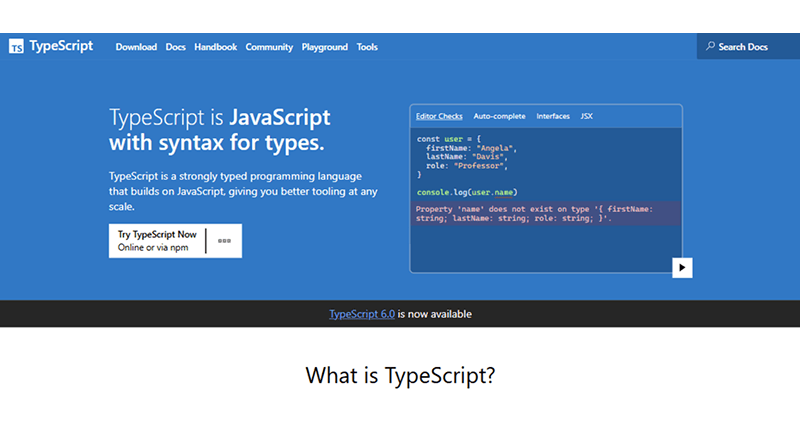
TypeScript is an open-source programming language created by Microsoft, especially for developers using JavaScript. It provides a better way to create clean, reliable, maintainable, and good code. With this flexibility, TypeScript is widely used by developers who create small web applications to large systems (from small web applications to enterprise software systems).
Essentially, TypeScript is a superset of JavaScript. That means any valid JavaScript program also works as valid TypeScript code. This allows developers to write code using familiar JavaScript syntax (and write additional new features) into their code using features like static typing, interface definitions, and enhanced development tools. After a developer has created the code using TypeScript, it converts it into standard JavaScript that runs either in a web browser or in any JavaScript runtime environment.
TypeScript Framework Support
- 1 Angular: The primary language used for building Angular applications.
- 2 NestJS: A complete, powerful backend framework that is built around types.
- 3 Next.js: A popular React-based web app development framework.
- 4 Express: A flexible Node.js-based web application development framework that many developers use with Types.
- 5 React: One of the most popular front-end libraries, which provides extensive support for using types.
💡
Most popular frameworks and development platforms either support or actively promote TypeScript developing.
Key benefits of TypeScript
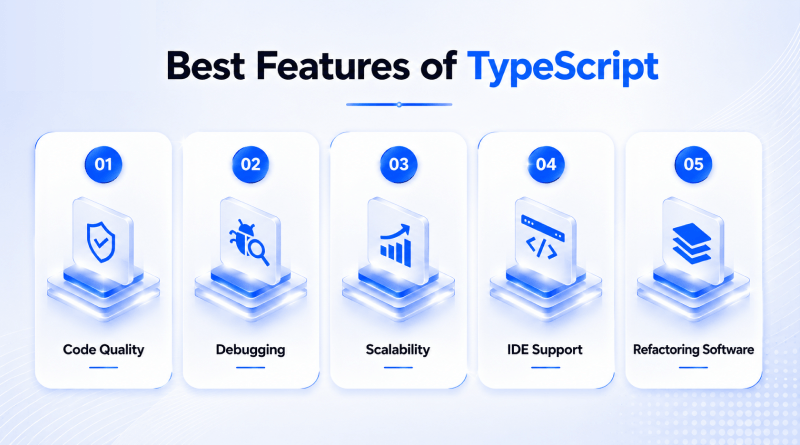
1) Code Quality: With TypeScript, it’s easier to write structured and tidy code, as it supports the standard coding conventions and type checking. Errors or bugs in the code are identified prior to execution, resulting in fewer runtime errors. Consequently, the overall app quality improves through the use of TypeScript.
2) Debugging: Debugging becomes easier since potential errors or bugs are found during the development phase. In addition, the troubleshooting time is reduced as the source of the issue is identified faster.
3) Scalability: As your applications continue to expand in either size or complexity, TypeScript’s structure makes scaling your project or adding new features easier. Furthermore, it allows you to have larger development teams. You can scale your application without adversely impacting the code quality.
4) IDE Support: Modern development tools (e.g., Visual Studio Code) provide extensive support for TypeScript, including intelligent code completion, code suggestions, navigational aids, and real-time detection of errors in the code you write. The above capabilities allow developers to increase their efficiency when using TypeScript and thereby reduce the time of code creation.
5) Refactoring Software: Updating and reorganizing an existing codebase presents risk. Refactoring existing code bases is safer when using TypeScript. It alerts developers about the impacted code portions and flags the warnings for compatibility errors prior to deployment. This ensures the team feels confident about the required improvements and optimizations to the applications.
How to select the ideal TypeScript hosting provider?
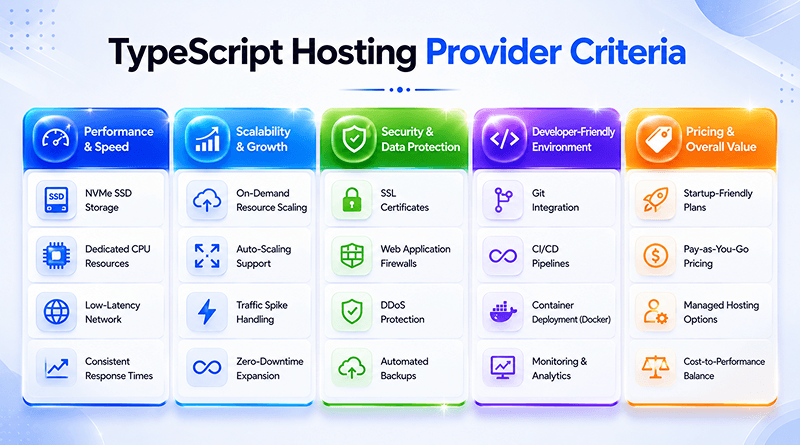
If you are new to TypeScript hosting, the most common factor you will assess is the pricing and features of the providers. However, the provider you choose directly impacts the performance, security, scalability, and long-term growth of your application. Therefore, it’s essential to compare the providers on a multi-faceted level, which eliminates future costly migrations or performance bottlenecks.
Below are the key aspects that you should consider when evaluating a TypeScript hosting provider:
1. Application Performance & Fast Loading Times
The performance of your application has a direct effect on the user experience. An application that takes a long time to load frustrates users, raises bounce rates, and adversely impacts the business’s success. Your chosen TypeScript hosting provider should provide the necessary resources needed to quickly execute requests and maintain consistent response times.
SSD NVMe vs. NVMe Storage
How fast your applications run is dependent on the type of storage technology used. NVMe SSDs offer faster data access, lower latency, and improved database performance compared to traditional HDDs.
Sufficient CPU Resources
Processing power determines how efficiently your application handles requests, backend tasks, and heavy workloads. Dedicated CPU resources improve stability and responsiveness.
Low Latency Networks
Optimized network infrastructure, high-quality bandwidth, and geographically distributed data centers help reduce latency and improve user experience.
2. Scalability
Your hosting needs vary from time to time and with growth and traffic results. As traffic to your application increases, your infrastructure expands to maintain high-performance levels. Thus, your TypeScript hosting provider should offer seamless scalability features to grow without any degradation in performance or additional downtime.
Several cloud hosts also provide auto-scaling capabilities so that when the traffic spikes, they will automatically allocate resources. This keeps your performance at a high level while at the same time optimizing your infrastructure cost.
3. Security
When you host TypeScript applications, security should always be part of your decisions. A single incident of security malfunction could lead to an interruption of your application’s availability, a loss of customer trust, or its overall business capabilities.
SSL Certificates
The purpose of an SSL certificate is to encrypt all of the data exchanged between users and the application. This protects sensitive information, increases user confidence, and improves your search engine ranking.
Firewalls
Web applications and network firewalls provide protection by filtering out malicious traffic before it enters your servers. It reduces the likelihood of unauthorized access and protects you from common cyber attacks.
DDoS Protection
Protecting against Distributed Denial of Service (DDoS) attacks is important because they overwhelm your servers with requests. This results in downtime for your users. Hosting providers that offer DDoS mitigation ensure that your application stays online even in the case of a large-scale attack.
Automated Backups
In case of accidental loss of information, system failures, or incidents relating to security, backups create a safety net by making regular copies of data. However, the backups should be automated by your TypeScript hosting provider. This minimizes the retrieval and service restoration time.
4. Developer Experience
A hosting provider should create an environment where applications can be deployed with minimal complexity while managing the ongoing development.
Git Integration
In TypeScript, developers benefit from integrating their updated code directly into Git repositories. This improves workflow efficiency and provides better version control during development.
CI/CD Support
CI/CD tools offer automated processes for testing, building, and deploying applications, thereby reducing manual work, eliminating errors, and speeding up the deployment time of new apps. It reduces the manual work required during these processes, eliminating errors and speeding up the deployment time of the new apps.
Container Deployment
Today, many applications written in TypeScript require the containerization of application code using tools such as Docker. Therefore, your chosen TypeScript hosting provider should support this deployment with advanced flexibility.
Monitoring and Analytics Tools
Monitor the health of your app in real-time so that you can see how well your server is performing, its resource utilization, its uptime availability, and its overall health. The use of built-in monitoring and analytics tools helps you identify an issue before it can affect your users.
5. Value and Price
Price is still one of the top considerations when selecting your TypeScript hosting provider. Remember, the best option is not always the cheapest or most expensive one; each provider has their own particular blend of price, performance, and features that make it the right solution for you.
Startup Types of Plans
Because startups or small businesses are more likely to develop with TypeScript in the early stages of their project. Thus, having a budget-conscious plan is one of the most affordable ways to build your TypeScript applications without high investment.
Pay-per-Use Pricing
With most of the
cloud hosting providers, pricing is set on a usage basis, so you are charged for only the resources that you actually consume.
Managed Hosting Options
Using a managed TypeScript hosting solution removes the server management overhead that an individual developer or team typically has to incur. It includes performing server security updates, monitoring, and backups, and maintaining their infrastructure so that the developer can focus on developing rather than server management.
Which are the best TypeScript hosting providers?
The choice of a TypeScript hosting provider for your apps affects many factors, including the overall performance, security, and growth potential of your app. Regardless of what type of TypeScript application you are building, from a simple web application to a SaaS application or an enterprise-type application, choosing a quality hosting provider ensures the app’s ease of deployment and growth.
Below are some of the best TypeScript hosting providers offering reliable infrastructure, deployment flexibility, and scalable environments for modern applications.
| Provider | Best For | Deployment Method | Key Strength | Managed Hosting | Scalability |
|---|---|---|---|---|---|

|
SMBs, startups, agencies, and developers | One-click deployment, VPS, Cloud | Performance + Managed Support | Yes | High |

|
Developers and growing startups | Droplets, Kubernetes, App Platform | Simplicity and Developer Experience | Partial | High |

|
Enterprise applications and large-scale deployments | EC2, Lambda, ECS, EKS | Enterprise Scalability | Partial | Very High |

|
Enterprise applications and cloud-native projects | Compute Engine, Cloud Run, GKE | Cloud-Native Infrastructure | Partial | Very High |

|
Cost-efficient projects and flexible cloud deployments | Cloud Instances, Bare Metal | Cost Efficiency | Partial | High |

|
Frontend applications and static websites | Git-Based Deployment | Frontend Hosting Simplicity | Yes | Moderate |

|
Rapid application deployment and simplified management | Git-Based Deployment | Ease of Deployment | Yes | Moderate |
1. MilesWeb
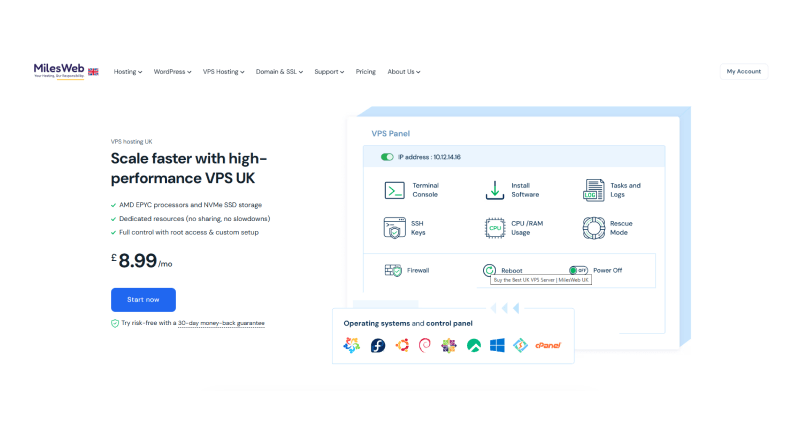
MilesWeb is a leading web hosting provider that helps developers, small businesses, agencies, and other businesses find their ideal hosting solution. MilesWeb has a wide range of options, including high-performance infrastructure and managed hosting, all designed to meet the needs of developers, businesses, startups, and growing companies.
High-performance cloud and VPS hosting solutions allow for TypeScript application development and production hosts. Therefore, the options provided at MilesWeb make it suitable for applications of all sizes (e.g., from basic web apps to completely resource-intensive business applications).
Key Features:
- High-speed NVMe SSD storage for fast and reliable storage with high accessibility and speed.
- Fully managed VPS and cloud hosting solutions.
- One-click deployments for web apps and applications
- Scalable infrastructure for the growth of a company.
- Free SSL certification to ensure data is protected and not tampered with.
- Prominent security firewalls for server protection and monitoring.
- 24/7 expert support through live chat, email, and ticketing.
Best For: Developers and other IT professionals find MilesWeb’s TypeScript hosting solutions ideal for required cloud infrastructure, affordable plans, and added benefits of professional-grade support (e.g., managed hosting).
👍 Pros
Infrastructure built on fast SSD NVMe hardware
Eliminates administrative overhead costs
Scalable plans are available to expand the project over time.
Good security measures and excellent uptime
Responsive and professional support
⚠️ Cons
Some advanced hosting configurations require high-tier plans
Options for enterprise-level customizations are not the same as hyperscale cloud hosting
2. DigitalOcean
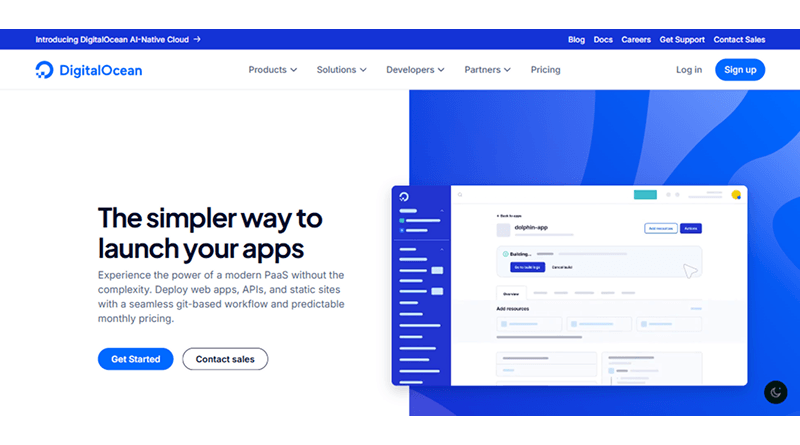
DigitalOcean is a cloud platform popular among developers. It is easy to use and has a simplified and predictable pricing model, along with developer-focused products. Its droplets (virtual servers), managed database offerings, and managed Kubernetes services create a flexible cloud development infrastructure for deploying and managing TypeScript applications.
Key Features:
- Droplets (SSD-based cloud instances)
- Managed Kubernetes for TypeScript hosting
- Multiple configurations of virtual machines
- Managed databases and object storage
- API-driven management of your infrastructure
- Automatic backups and monitoring of your applications
Best For: Developers, startups, & small & medium-sized businesses looking for an affordable, scalable solution to host their TypeScript applications can use DigitalOcean’s cloud service.
👍 Pros
Simple user interface (control panel)
Predictable & straightforward pricing
Fast provisioning of server instances
Great developer community and documentation
⚠️ Cons
Fewer managed services available as compared to other providers
Expensive plans for startup TypeScript users
Limited enterprise features
Related Read: DigitalOcean Alternatives
3. Amazon Web Services (AWS)
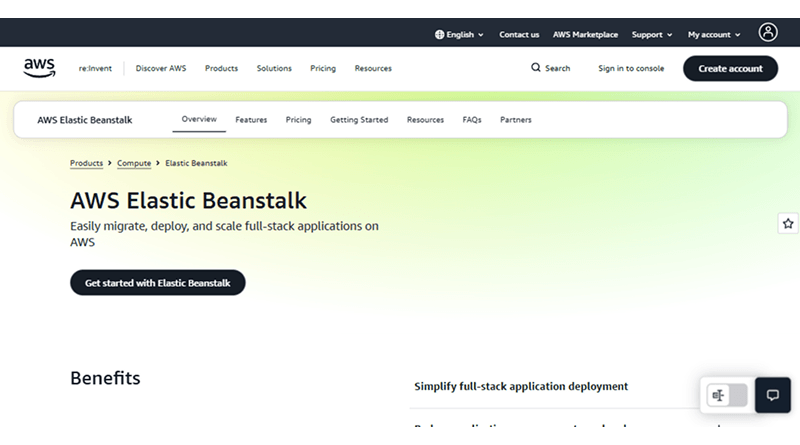
Amazon Web Services is one of the largest cloud computing platforms and provides a full suite of application deployment, storage, networking, data analysis and reporting, and security services. Because AWS has profound available infrastructure, it is often the preferred platform for companies that operate large TypeScript applications.
Key Features:
- Virtual servers based on AWS EC2
- Serverless computing via AWS Lambda
- Load balancing as part of the elastic load balancing service
- Auto-scaling capabilities
- More advanced security compliance and toolset
- Large, geographically distributed worldwide data centers
Best For: AWS is best suited for businesses that operate in the enterprise space or for SaaS companies that need a highly scalable and affordable worldwide presence.
👍 Pros
Multiple services and plan tiers available
Scalable hosting infrastructure
Good security and reliability for TypeScript users
Large worldwide data center network
⚠️ Cons
Difficult interface usage for beginners
Complex pricing system
High technical expertise is required to manage servers
4. Google Cloud Platform (GCP)
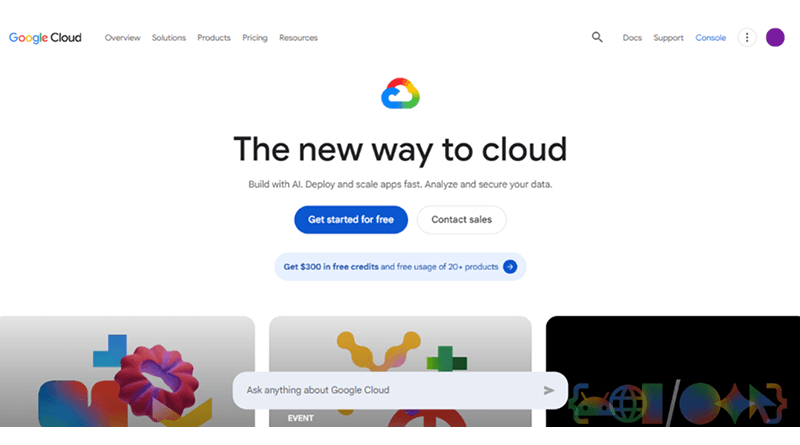
The Google Cloud Platform gives developers the foundation to develop and scale their applications in the cloud quickly and easily. It offers excellent communications and networking capabilities, advanced data analysis tools, and a full suite of services to help developers manage their containerized applications.
Key Features:
- Compute Engine virtual machine
- Google Kubernetes Engine (GKE)
- Run time service for run-time (containerized) applications
- Global load balancing
- Integrated AI & analytics features
- Flexible pay-as-you-go pricing plans
Best For: Businesses who create scalable web apps with microservices designs or cloud-based TypeScript applications can ideally utilize Google Cloud Platform.
👍 Pros
Awesome network performance
Strong container/Kubernetes support
Reliable global infrastructure
Flexibility in resource allocation
⚠️ Cons
Technical interface to learn for novices
Pricing for complex workloads is hard to estimate
5. Vultr
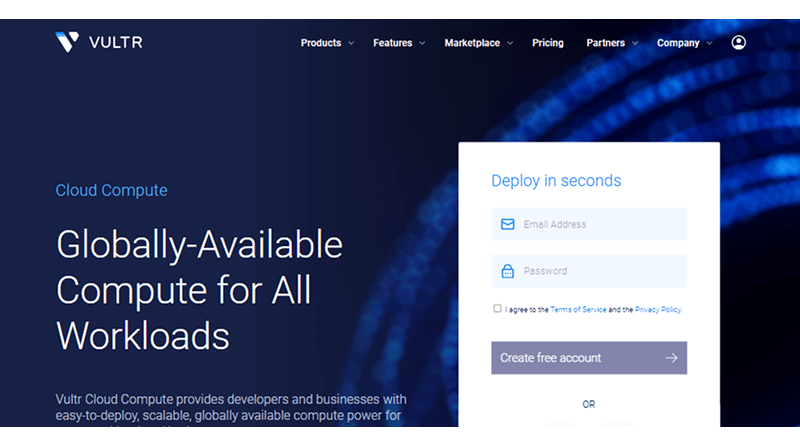
Vultr offers simple pricing for cloud hosting, a presence throughout the world with high-connecting data centers, and proven speed through their virtual servers. Developers use Vultr to deploy and expand TypeScript applications without having the size or complexity of a large cloud provider.
Key Features:
- High-speed cloud compute instances
- NVMe SSD storage
- 1-click application deployment
- Data center locations designed worldwide
- Auto back-up
- Bare metal server options
Best For: Vultr’s cloud service is ideal for developers, young companies, and enterprises that require economically priced TypeScript server hosting worldwide.
👍 Pros
Industry-leading pricing
Easy-to-navigate management interface
Quickest deployment of the server
Multiple ways to deploy your applications (especially TypeScript apps)
⚠️ Cons
Few managed services as compared to larger cloud providers.
Less advanced enterprise-type integrations
High plan costs
6. Netlify
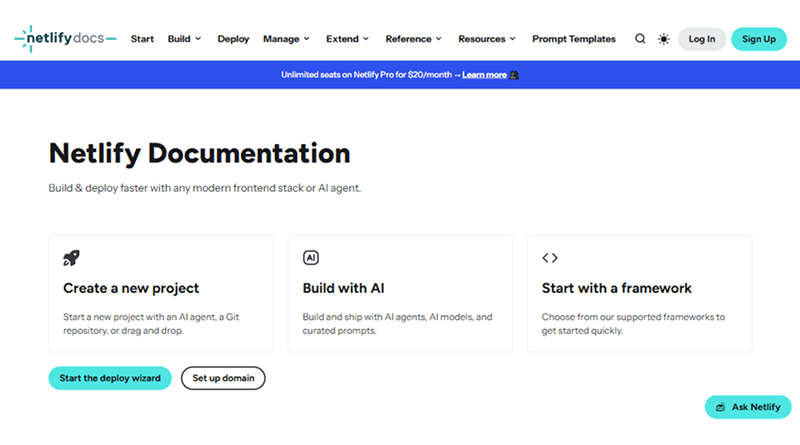
With its fast and automated workflow, Netlify provides a straightforward method of deploying front-end applications to the cloud. Thus, it’s primarily used by developers working on static and modern web-based applications using frameworks such as React and Next.js.
With Netlify, there’s continuous deployment from Git repositories, in-house CI/CD workflows, distribution through a global CDN, serverless functions, custom domains, and on-demand SSL provisioning within the automation workflow.
Key Features
- Continuous deployment capability from your Git repositories
- In-house CI/CD workflow
- Global CDN distribution
- Support for serverless functions
- Custom domain management
- Automated SSL provisioning
Best For: Front-end developers & teams developing React, Next.js, and static site generators using TypeScript.
👍 Pros
Incredibly easy to deploy
Great integration with Git
Fast distribution of content across the globe
A free account is available for small projects
⚠️ Cons
Not as well-suited to complex back-end applications
Pricing is high because of the advanced features available
7. Heroku

Heroku is a PaaS (Platform as a Service) that enables developers to simply deploy applications by abstracting a large percentage of the underlying infrastructure. This allows developers to focus on building their application while Heroku takes care of server provisioning, scaling, and maintenance.
Key Features:
- Git-based deployments made easy
- A managed runtime environment
- Automatic scaling capability
- An add-on marketplace
- Built-in monitoring capabilities
- Support for many programming languages
Best For: Developers & development teams who want an easy-to-use platform for fast deployment of TypeScript applications without having to manage servers.
👍 Pros
Ease of use when deploying
Less infrastructure management
Rapidly deploy new applications
Wide choice of add-ons and integrations
⚠️ Cons
Higher ongoing costs than self-managed cloud solutions
Less flexibility on infrastructure
A learning curve involves technical knowledge
While all the providers mentioned above will work for TypeScript applications, you should select what is best for your project’s level of complexity, expected traffic, budget, and management strategies.
Why is MilesWeb a strong choice for TypeScript hosting?
Selecting the best TypeScript host is critical for your application’s performance, safety, and supportability. As mentioned in the above list, there are multiple hosts offering TypeScript support, but MilesWeb has come up with a balance of managed services, high-performance infrastructure, cost-effective prices, and tools that make app development easy for TypeScript developers.
Below are some of MilesWeb’s top TypeScript hosting features that make them stand out from the crowd as a unique provider:
1. Simple Deployment of TypeScript Applications
MilesWeb’s TypeScript/Node.js hosting makes it easy to deploy TypeScript web projects (REST APIs, SaaS applications, and full-stack applications) quickly. The environment is easy to use for all modern web project developers with a robust infrastructure.
2. Less Administrative Complexity
Managing the servers, upgrading software, taking backups of your applications, and protecting the data are time-consuming tasks. MilesWeb offers managed TypeScript hosting services that have no administrative overhead. Therefore, developers are free to concentrate on innovation and not worry about hardware or server maintenance.
3. Affordable Hosting Performance
MilesWeb provides a quality and affordable TypeScript hosting solution that is great for startups, freelance developers, and small/medium-sized enterprises. The flexible hosting plans allow you to start with just what you need and then upgrade in later stages as your application grows.
4. Reliable Uptime for Business-Critical Applications
Application uptime is a vital aspect of providing a good user experience. MilesWeb provides customers with reliable uptime and consistent performance, so users can confidently deploy applications.
5. High-Speed NVMe Storage for Improved Performance
With NVMe SSD storage supporting application responsiveness and speeded-up database operations, MilesWeb’s customers enjoy faster loading times. The redundant 1 Gbps network works on all the latest devices compared to traditional hard drive technologies.
6. Dedicated Support for Customers Worldwide
There’s 24/7 customer support service that provides immediate assistance to all MilesWeb worldwide customers for resolving technical issues and minimizing downtime.
7. Hosting Solution for Startups, Developers & Growing Companies
MilesWeb offers cloud & VPS hosting solutions scalable to the changing needs of developers and growing businesses. It ensures that TypeScript applications are hosted efficiently in the future.
What are the common TypeScript deployment issues?
Although TypeScript provides developers with the flexibility to create dependable and manageable applications, deploying a TypeScript application presents many challenges. Thus, understanding common TypeScript app deployment issues and their resolution strategies ensures a successful deployment process and long-term stability.
1. Deployment Configuration Issues
⚠️ Issue
TypeScript must first be compiled into JavaScript to function in a production environment. Issues arise from misconfigured compiler settings, outdated configurations, missing build scripts, or using an incompatible version of Node.js, and result in app or deployment failure.
✅ Resolution
Properly configure your tsconfig.json file and maintain a consistent environment across development and production. Conduct local testing of production builds; rely on CI/CD automation for build validation and ensure version alignment of Node.js to reduce the risk of failures when deploying to production.
2. Dependency Management Issues
⚠️ Issue
TypeScript applications are often dependent on third-party libraries. As development continues, you encounter different types of library-related issues (i.e., version conflicts, incompatible versions, deprecated libraries, and missing dependencies). These can lead to unintended issues when deploying to production.
✅ Resolution
Continuously manage your dependencies (keep up to date); use lock files (i.e., package-lock.json or yarn.lock); remove unused dependencies; stage-test dependencies prior to deploying to production; leverage container technologies to promote consistency across OS resources.
3. Scalability of Backend Applications
⚠️ Issue
When the volume of users exceeds the initial capacity of back-end apps (like NestJS, Express.js, or Next.js), those applications start experiencing performance degradation and reliability issues.
✅ Resolution
Use a cloud-based hosting provider like MilesWeb that provides a flexible infrastructure, load balancers, caching options, and containerized deployment options. Planning early for scalability allows applications to expand without significant changes to infrastructure.
4. Management of Environment Variables
⚠️ Issue
Environment variables typically contain sensitive data, such as API keys, database passwords, and authentication tokens. Poor management of these variables puts one at risk of exposing confidential data.
✅ Resolution
Store sensitive data outside the codebase, utilize secure environment variable management services, create distinct development and production configurations, and routinely rotate access credentials to help keep your applications safe.
5. Risks of Application Security
⚠️ Issue
Web applications are at risk of attack via unauthorized access attempts, malware, DDoS attacks, insecure dependencies, or data breaches. A well-written application may still be vulnerable if the hosting platform does not implement proper security controls.
✅ Resolution
Implement SSL encryption and firewalls, establish strong authentication policies, conduct regular security assessments, create and monitor activity logs, set up automated backups, and apply regular software patches. Selecting a secure TypeScript hosting company improves application security and decreases operating risk.
Summary
Selecting the right hosting provider for TypeScript applications plays an important role in the overall performance, security, scalability, and longevity of your applications. The hosting environment ultimately determines how well (or poorly) the applications built using TypeScript will perform.
Choosing the optimal hosting solution for your TypeScript application depends on the needs of your project. Developers creating individual projects or runners will likely be interested in the most cost-effective hosting options, whereas successful companies or enterprise companies require infrastructure that provides enterprise-level scalability, higher security, and uptime.
Each of the hosting providers presented in the guide above possesses unique strengths. However, if you are looking for a company that will provide exceptional service with an emphasis on delivering value, consider MilesWeb. With high-performance SSD NVMe drives, the best uptime rates, robust security capabilities, and a knowledgeable customer service team, you get the ideal infrastructure to develop and host your modern TypeScript application.
Remember, the best TypeScript hosting provider is one that meets your technical requirements, budget constraints, and long-term objectives.
FAQs
1. What does “TypeScript hosting” mean?
“TypeScript hosting” refers to a hosting environment in which applications built using the TypeScript language can be deployed and executed. As these apps must first be compiled into JavaScript before they can be executed, the best TypeScript hosting provider is needed that can provide the necessary infrastructure.
2. What hosting options work best with TypeScript?
The best type of TypeScript hosting depends on the unique requirements of your project. Commonly used types of TypeScript hosting include cloud, Virtual Private Server (VPS), managed, and serverless hosting. Developers tend to prefer hosting options that provide support for Node.js.
3. Why do I need hosting for a TypeScript application?
A TypeScript hosting service allows you to run your TypeScript application without errors. These hosting servers are designed to store files, process requests, and fulfill users’ needs over the internet.
4. Is TypeScript hosting good for production websites?
Yes! TypeScript hosting is an ideal choice for production-level websites. It utilizes TypeScript’s statically typed components (reducing application errors) and leads to an overall more stable application. If you are using TypeScript hosting, your application is capable of supporting everything from small business websites or API-based apps to large-scale/complex SaaS and enterprise solutions.