
 Jackson Lane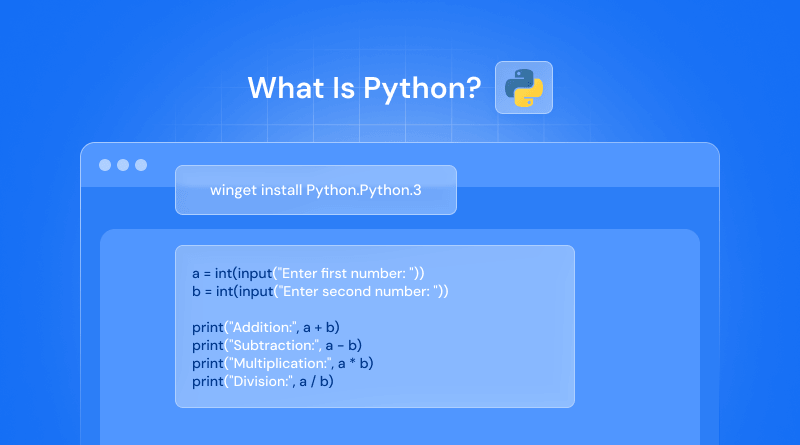
If you look at the most successful digital projects today, they all share one thing in common: they were built to iterate. In an era where a tool like an AI website builder can generate a layout in seconds, the underlying language needs to be just as agile. This is why Python has moved from a niche scripting tool to the primary driver of modern development. It reads like a conversation, yet it handles the heavy demands of modern data science without breaking.
The true strength of the language reveals itself when you move past local testing and into live production. A well-written Python backend deserves more than just a standard server; it needs the isolated power of a bare-metal setup or the flexibility of cloud-native scaling. This guide goes beyond a standard list of definitions. It covers the spectrum between basic Python logic and high-performance server-side automation.
Let’s dive in.
Table Of Content
What is Python?
At its core, what is Python? It is a high-level, interpreted programming language created by Guido van Rossum in the late 1980s. Unlike languages that require you to manage computer memory manually, Python handles the background technicalities, allowing you to focus on solving problems.
It is often described as a “general-purpose” language. This means it isn’t limited to one specific field. While some languages are built specifically for web browsers or mobile apps, Python language capabilities extend to almost every domain imaginable. It is as comfortable managing a web server as it is processing massive datasets for research.
TL;DR: Python at a Glance
Python is a high-level language that emphasizes readable code, which helps developers avoid getting stalled by intricate syntax when pushing a project to production. It acts as the backbone for today’s tech, particularly in AI and cloud environments where it manages the heavy lifting for machine learning and infrastructure automation. By converting code into bytecode, it runs reliably on any platform, while a massive network of pre-made libraries means you rarely have to start from scratch.
The Fundamentals of Python Architecture
When you learn Python programming, you quickly realize that the language replicates English. This design choice was intentional. The goal was to create a language where the code is as easy to read as a book. Python replaces the conventional curly braces and heavy punctuation for simple indentation. This approach keeps the structure clear by default, so the logic stays easy to follow when teams work on the same file.
Python eliminates the overhead typically associated with lower-level languages. Python skips the usual syntax clutter, so logic runs immediately without piles of repetitive code. This move lets you stop focusing on language rules and spend that energy building high-performance systems.
Related Read: Best Python Hosting Providers
Why Python is Popular Among Developers
If you ask a senior engineer why Python is popular, they won’t just mention the syntax. They will point to the ecosystem.
- The Built-In Utility Model: Python includes a massive standard library, so the tools you need—like parsing JSON, querying a database, or handling HTTP requests—are readily available.
- Community Support: With millions of people using it, you can be certain that if you run into a bug, someone else has already found the fix.
- Versatility: It bridges the gap between different technologies. It can act as the integration layer that connects a C++ backend to a modern user interface.
- Integration: Python works effortlessly with modern business automation tools and various cloud infrastructure setups.
Key Features of Python
To understand the features of Python, one must look at how it manages complexity. Python puts the focus on saving the developer time rather than worrying about how many clock cycles the machine uses.
- Interpreted Execution: Unlike languages that require a lengthy compilation phase, Python executes code line-by-line.
- Dynamic Typing: You can skip manual type declarations entirely. Python identifies whether a variable is an integer, string, or float during execution, keeping your scripts clean and straightforward. This removes the need for manual type declarations, allowing you to keep your code lean and readable.
- Standard Library Depth: Industry experts value Python uses because the standard library handles tasks like encryption and email processing right out of the box.
- Extensive Third-Party Packages: With tools like the OpenClaw plugin or custom automation libraries, you can expand Python’s capabilities with one command.
Benefits of Python
Python offers more than just a way to write code; it changes how businesses build and launch new ideas. These factors explain why Python remains the premier choice for developers and organizations.
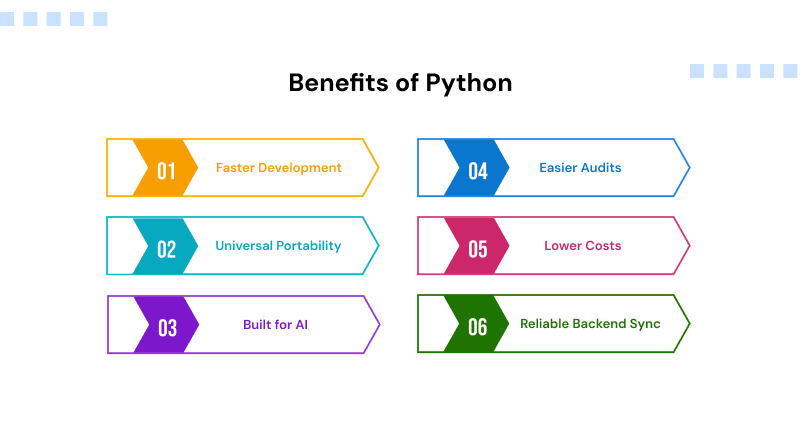
- Faster Development: The simple syntax helps teams turn a concept into a working model quickly, which reduces the hours spent on initial development.
- Universal Portability: Because Python runs on a virtual machine, you can use the same code on Windows, macOS, or Linux without having to adjust any settings.
- Built for AI: Python powers essential frameworks like TensorFlow, PyTorch, and Ollama, offering a streamlined path for incorporating artificial intelligence into any project.
- Easier Audits: Clean code makes it easier for security teams to find flaws and patch vulnerabilities before the software goes live.
- Lower Costs: Being open-source and having a vast pool of developers makes it a smart financial move for both small startups and large companies.
- Reliable Backend Sync: It works well with high-performance infrastructure, such as managed WordPress hosting, to handle heavy data processing in the background.
Related Read: How Managed WordPress Hosting Reduces Your Ops Workload and Boosts Productivity?
What is Python Used For?
Most modern tech stacks rely on Python to run their business applications. Python applications handle the backend logic for the entire digital stack.
- Web Development: Frameworks like Django and FastAPI power the backends of global platforms. Developers often use top Python template engines to create dynamic, data-driven websites.
- Data Analysis: Python has become the primary tool for handling massive datasets, often beating standard spreadsheets in speed and precision.
- Automation & Scripting: System administrators rely on Python to manage IaC, which handles the deployment of servers and cloud resources automatically.
- Machine Learning: Python provides the power behind today’s technology, from AI website builders to financial forecasting tools.
How Python Works
To see how Python works, you have to look at the two-step translation it uses for speed and portability. First, the interpreter scans your source code for errors. Once the syntax is validated, the interpreter converts your code into bytecode—a portable, low-level format that runs on any system.
The Python Virtual Machine (PVM) is what actually executes the bytecode. Because of this setup, your code behaves the same way whether it’s stored on a high-performance server or running inside a local JavaScript code editor environment.
Python for Beginners
For those starting their journey, understanding Python is about mastering the logic rather than the symbols. If you’re starting out, a Python tutorial for beginners introduces core concepts: you will learn to store information in variables, automate repetitive tasks with loops, and organize your logic into reusable functions.
To start, you just need a reliable environment to run your code. Choosing the best IDE—such as VS Code or PyCharm—provides the linting and debugging tools necessary to write clean code. As you move forward, you will start using libraries to tackle actual tasks, like linking your scripts to an API tool or handling data entry for a web portal automatically.
Internal Standards & Implementation
In a professional dev environment, code that just happens to function is not the end goal. Implementation must follow strict protocols to remain scalable.
- PEP 8 Compliance: Following the official Python style guide keeps your code legible for diverse teams and throughout years of maintenance.
- Dependency Management: Leveraging tools like Poetry or Pipenv avoids version conflicts by keeping project requirements isolated.
- Documentation: Professional Python projects require clear docstrings and type hinting to keep the code readable. Without them, nobody can maintain the code as it grows.
Python vs Other Languages: Feature Comparison
This breakdown shows how Python stacks up against other popular languages in a professional environment.
| Feature | Readability | Execution Speed | Primary Use | Memory Management | Learning Curve |
|---|---|---|---|---|---|
 |
Very high; looks like English | Slower (Interpreted) | Data, AI, Scripting | Automatic (Garbage Collected) | Easiest for beginners |
 |
Moderate; quite wordy | Fast (JIT Compiled) | Enterprise apps, Android | Automatic | Moderate |
 |
Low; complex syntax | Fastest (Compiled) | Systems, Game engines | Manual | Steep |
 |
Moderate; depends on framework | Fast (V8 Engine) | Web dev, Frontend | Automatic | Moderate |
Concluding Insights
Moving toward autonomous workflows and machine intelligence makes Python the go-to tool for turning human ideas into working software. Whether you are managing high-performance server clusters or linking complex models, the language offers the flexibility you need to stay ahead of the curve.
It has transitioned from a simple utility into a central component of modern architecture. Choosing Python as a programming language represents a strategic commitment to a framework designed for scalability. The extensive library ecosystem ensures that these features of Python provide a dependable foundation for long-term infrastructure.
Embarking on a professional journey with Python does not require extensive technical expertise or specialized mathematical training. Utilizing Python prepares you for the technical requirements of the coming years. This proficiency serves as a reliable asset for anyone aiming to reach higher-level roles and sustain long-term professional success.
FAQs
1. Why is Python considered the best programming language for beginners?
Python is basically written in English, which saves you from wrestling with syntax when you just need to get something working. It puts the focus on the actual logic rather than the technical quirks of the language. These remarkable features of Python explain why it remains the most straightforward way to start coding.
2. Can I learn Python programming without any prior coding experience?
You can start using Python without having any technical knowledge. Plenty of people learn Python programming with no prior experience at all. The language is built for simplicity, so you can write basic scripts on your first day.
3. Is Python good for data science and machine learning?
It’s the industry standard. Most of the heavy lifting in AI and data analysis happens through Python because it has massive libraries that handle the computations for you. In terms of Python applications, nothing else comes close to its dominance in the data world right now.
4. How long does it take to learn Python basics?
Spending an hour or two daily lets you grasp the basics in about a month. You won’t be an expert, but you’ll know how to build scripts and handle minor tasks. Following a Python tutorial for beginners keeps your progress steady and prevents you from getting off track.