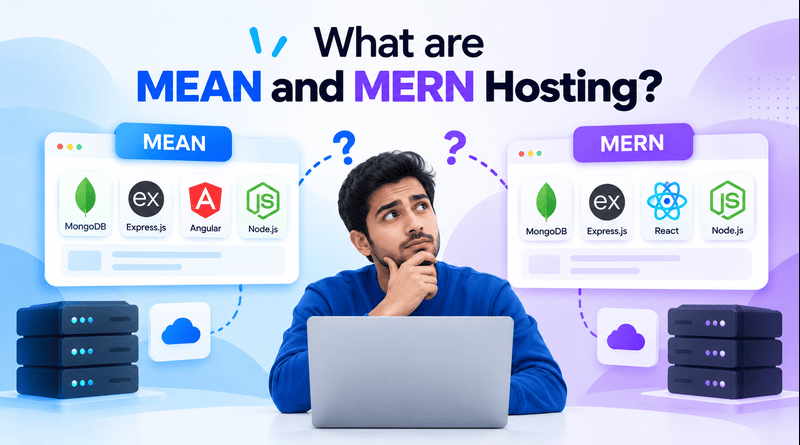
High technical endurance is a must for every web project’s technology stack. MEAN (MongoDB, Express.js, Angular and Node.js) and MERN (MongoDB, Express.js, React and Node.js) are technology stacks that are used to develop end-user applications. Ultimately, both tech stacks enable developers to create seamless and powerful applications that meet evolving business needs. The article contains… Read More
The fastest Angular apps rarely win because of the code alone. They win because of where that code runs, since framework-level optimizations only carry a build partway before the server underneath takes over. Infrastructure, which most teams only consider after something breaks, determines everything from the first load to how well an app holds up… Read More
The hosting industry sells speed. LiteSpeed is one of the few things behind that promise that’s worth actually understanding. But the software alone doesn’t decide how fast a website loads—server hardware, cache tuning, and data center placement do just as much of that work. Even two plans running identical LiteSpeed setups can perform very differently… Read More
A cloud infrastructure decision rarely gets revisited until something forces the question. A bill lands higher than expected, a support ticket sits unanswered for two days, or a project outgrows what a plan was ever built to handle. That moment is usually when Vultr users start looking around. Vultr earned its place through rapid deployment… Read More
Somewhere between the tap of a link and the moment a page appears on your screen, Linux has already done most of the work, quietly powering well over 90% of the world’s active servers today. A website loads faster, handles traffic spikes better, and stays secure with a simpler setup underneath, which is precisely why… Read More
We bring you the latest and greatest savings opportunities!